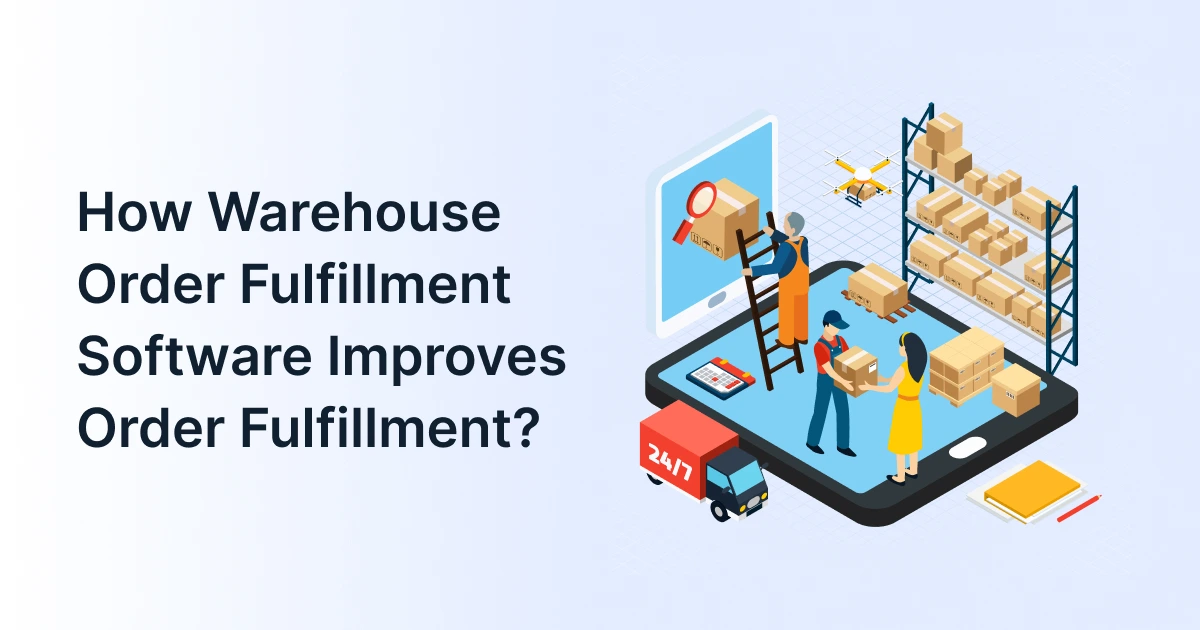
How Warehouse Order Fulfillment Software Improves Order Fulfillment?

Summary
Modern fulfillment demands speed, precision, and complete visibility. Warehouse order fulfillment software transforms chaotic floor operations into aligned, data-driven workflows. By automating inventory tracking, optimizing picker routes, and integrating sales channels, businesses reduce picking errors significantly and cut operating costs dramatically.
Introduction
Running a busy warehouse is a challenging task in itself. Orders pour in from online stores, B2B portals, and custom sales channels. Meanwhile, workers walk miles across the floor searching for items on paper clipboards. Mispicked items, delayed shipments, and stockouts cost money and ruin customer relationships.
Implementing warehouse order fulfillment software turns this chaos into a smooth operation. At GrexPro, we help businesses modernize their cloud technology stack. In this guide, you will learn how modern software fixes fulfillment friction and helps you grow without stress.
What Is Warehouse Order Fulfillment Software and How Does It Work?
Warehouse order fulfillment software is a cloud-based application that manages the entire lifecycle of an order. It includes everything in the warehouse management system, from receiving and inventory tracking to picking, packing, and shipping. It syncs inventory in real time across all sales channels and guides warehouse staff in step-by-step digital directions.
Managing orders across multiple channels requires complete control over stock and worker movements. Without digital centralized tools, small mistakes quickly multiply into piled-up customer complaints.

Key Industry Statistics
Order Picking Labor Cost: Accounts for 55% of total warehouse operating expenses.
Source: Gitnux Industry Report
Picker Travel Distance: Unoptimized pickers walk 10–15 miles per shift.
Source: MHI / Warehousing Benchmark
Barcode Scan Accuracy: Achieves 99.9% accuracy vs. 99.5% with paper lists.
Source: WERC Benchmark Data
Labor Cost Reduction: WMS adoption cuts warehouse labor costs by 10%–20%.
Source: Gartner Research
Invoice Dispute Reduction: Automated billing & tracking cuts client disputes by 35%.
Source: WERC Report
What Are the Core Components of Modern Fulfillment Technology?
Modern platforms replace random assumptions with digital precision across every square foot of your building. They direct your staff where to go, what item to pick, and how to verify it instantly.
- Inventory Tracking: Provides live visibility into exact bin, shelf, and pallet locations across facilities.
- Order Orchestration: Automatically routes sales orders to the closest fulfillment center with ready stock.
- Mobile Scanning: Uses handheld scanners to verify serial numbers and eliminate pick errors.
- Shipping Integration: Prints carrier labels automatically while selecting the best shipping rates.
Modern software keeps every team member synchronized through one central source of truth.
Why Is Order Fulfillment So Challenging Without Modern WMS Tech?
Order fulfillment fails without modern software because paper-based processes create blind spots, inventory discrepancies, and inefficient travel routes. Manual entry leads to mispicks, delayed deliveries, high labor costs, and unhappy customers.
Manual operations force workers to spend more time searching for products than actually packing orders. This slow-paced process limits how many orders you can ship each day.
For example, imagine a warehouse that still relies on printed picking sheets. A picker may spend nearly 20 minutes searching through multiple storage bays for a single item. Now imagine that item was moved to a different location, but the records were never updated. The result? Orders get delayed, shipments miss their deadlines, replacement searches consume valuable labor hours, and customers are left waiting. Over time, these small inefficiencies add up to higher operational costs and a frustrated warehouse team.
How Paper Processes Drain Your Profits?
- High Error Rates: Manual handwritten logs lead to misread product codes, wrong unit counts, and wrong customer deliveries.
- Excessive Labor Costs: Order picking is one of the most time-consuming and expensive warehouse operations, especially when picking routes are inefficient.
- Invisible Stock Levels: Without real-time sync, sales teams accidentally sell products that are already out of stock.
- Slow Return Processing: Handling customer returns manually clogs receiving bays and delays restocking sellable items.
Transitioning to automated software removes these structural hindrances permanently.
Major Ways Warehouse Order Fulfillment Software Improves Order Fulfillment
Warehouse order fulfillment software is one of the most important tools in WMS features. It elevates speed and accuracy by replacing paper picklists with dynamic mobile batch picking, optimized travel paths, and barcode verification. It eliminates extra walking, prevents mispicks, and automates packing checks.
Organizing everyday workflows lets your current team handle double the order volume without working extra hours. Discover how specialized cloud tools improve daily output below.
Travel Path and Walking Time Optimization
Unoptimized pickers walk up to 15 miles every single day. The platform calculates shortest paths based on product location and velocity.
- Smarter Pathing: Directs workers down aisles in a single continuous sequence without backtracking.
- Zone Picking Assignment: Keeps workers in dedicated sections to master specific product areas.
- Velocity Slotting: Places popular items near packing stations for quick access.
Error Prevention via Mobile Barcode Verification
By requiring a physical scan of every item before placing it into a tote, the software catches human mistakes instantly.
- Instant Verification: Mobile devices warn workers immediately if they scan the wrong SKU or lot number.
- Integrated Packing Scales: Compares final box weight against expected weight to catch missing items.
- Batch & Wave Picking: Allows workers to pick items for 10 orders at once instead of making separate trips.
Customer Trust & Real-Time Inventory Visibility
Customers expect accurate shipping updates and zero delays from the moment they place an order.
- Automated Order Tracking: Customers and customer service reps receive real-time status updates as orders move from picking to packing.
- Dynamic Safety Stock: The system triggers replenishment alerts before high-demand items run out completely.
- Better Space Utilization: Organizing inventory dynamically allows you to store more products in less footprint and helps you with warehouse space optimization.
Operational clarity keeps your customers coming back for repeat purchases.
Which Industries Gain the Most from Warehouse Order Fulfillment Software?
E-commerce, B2B wholesale distribution, pharmaceuticals, third-party logistics (3PL), and food and beverage industries gain the most. These sectors require high inventory accuracy, batch/lot tracking, fast order turnaround, and multi-channel synchronization.
Different industries face unique operational challenges that require flexible cloud technology. Selecting a solution customized to your operational model delivers maximum return on investment.
High-Volume E-Commerce
Online retailers process thousands of small orders daily. They need fast picking, automated label printing, and instant channel updates. The software syncs stock across platforms like Amazon and Shopify to prevent overselling. It processes customer returns fast to restock sellable items. It also expedites priority orders to meet same-day shipping deadlines easily.
B2B Wholesale Distribution
B2B operations manage bulk orders, palletized shipments, complex pricing, and strict retail labels. The platform generates branded packing slips and EDI compliance labels automatically. It combines separate items into single kits without confusion. It also books LTL and truckload carriers directly from the packing station.
Third-Party Logistics (3PL) and Healthcare
3PLs and pharmaceutical distributors need strict inventory segregation, custom billing, and lot tracking. Modern cloud software isolates client data securely within shared facilities. It uses first-expired, first-out (FEFO) picking to prevent product waste. Full digital audit trails simplify regulatory compliance without slowing down daily tasks.

How to Choose the Right Warehouse Order Fulfillment Software?
Choose software by evaluating your order volume, integration needs, scalability, and ease of use. Look for cloud platforms offering flexible REST APIs, mobile scanner compatibility, real-time analytics, and modular growth.
Selecting new software is a strategic investment that shapes your operational performance for years. Focus on platforms designed to adapt as your business expands.
Key Selection Criteria for Growing Businesses
- API Integrations: Ensure native connections with your ERP, e-commerce stores, and shipping carriers.
- Mobile Friendliness: Android-based mobile scanner interfaces reduce training time for new hires from weeks to hours.
- Cloud Architecture: SaaS platforms eliminate expensive local server maintenance and provide instant updates.
- Implementation Speed: Choose platforms that deploy in weeks rather than months to realize fast ROI.
Key Takeaways
- Accuracy First: Barcode scanning and real-time validation raise pick accuracy significantly.
- Speed & Throughput: Intelligent routing cuts picker travel time in half, speeding up dispatch cycles.
- Labor Efficiency: Adopting cloud WMS software reduces overall labor expenses and eases your budget.
- Scalability: Cloud-based architecture allows multi-channel operations to scale without headcount spikes.
Conclusion
Outdated manual processes, lost inventory, and mispicked orders destroy your profit margins and hurt customer relationships. Modern warehouse order fulfillment software gives you full control over floor operations, turning your fulfillment center into a scalable competitive advantage.
By adopting automated workflows and mobile scanning, businesses cut labor costs significantly, raise pick accuracy, and process orders faster than ever.
At GrexPro, we build intuitive SaaS technology platforms designed to simplify business operations. Whether you need a robust WMS Solution, ERP, or custom cloud integration, our platform helps you stay ahead in a fast-moving market.
FAQs
Q: What is warehouse order fulfillment software?
A: Warehouse order fulfillment software is a cloud application that manages receiving, inventory tracking, picking, packing, and shipping processes within a warehouse. It synchronizes real-time stock data with sales channels to ensure fast and accurate order delivery.
Q: How does warehouse order fulfillment software improve order accuracy?
A: It improves accuracy by replacing manual paper lists with handheld barcode scanning. Workers scan the bin location, item SKU, and tote before packing, which catches mispicks immediately and increases accuracy.
Q: What is the difference between warehouse management software and order fulfillment software?
A: A Warehouse Management System (WMS) oversees all warehouse operations, including receiving, putaway, yard management, and labor tracking. Order fulfillment software focuses specifically on processing customer orders, picking, packing, and carrier shipping. Today, modern WMS platforms combine both into one unified solution.
Q: How does warehouse picking software reduce fulfillment errors?
A: Picking software directs workers along optimized routes and requires instant barcode validation at every step. If a picker attempts to pick the wrong item or quantity, the handheld scanner alerts them immediately.
Q: Can warehouse automation improve order fulfillment speed?
A: Yes. Automation tools like batch picking, automated shipping label generation, and intelligent route planning eliminate downtime and cut worker travel time.
Q: Which industries benefit the most from warehouse order fulfillment software?
A: E-commerce retailers, B2B wholesale distributors, third-party logistics (3PL) providers, food & beverage distributors, and healthcare suppliers benefit the most due to high order volumes and complex inventory needs.
Q: What features should I look for in warehouse order fulfillment software?
A: Look for real-time inventory tracking, mobile barcode scanning support, seamless ERP/e-commerce integrations, automated wave/batch picking, and dynamic reporting dashboards.
Q: Is warehouse order fulfillment software suitable for small and growing businesses?
A: Yes. Cloud-based SaaS models allow small and growing businesses to access enterprise-grade fulfillment capabilities with affordable monthly subscriptions and fast setup times.
Author
Managing Director of Grexpro
Surendra Yarrum is a Business Strategist at GrexPro with expertise in ERP, CRM, and warehouse management systems, helping businesses enhance efficiency and optimize supply chain operations.