
Warehouse Space Optimization: Best Practices to Maximize Capacity

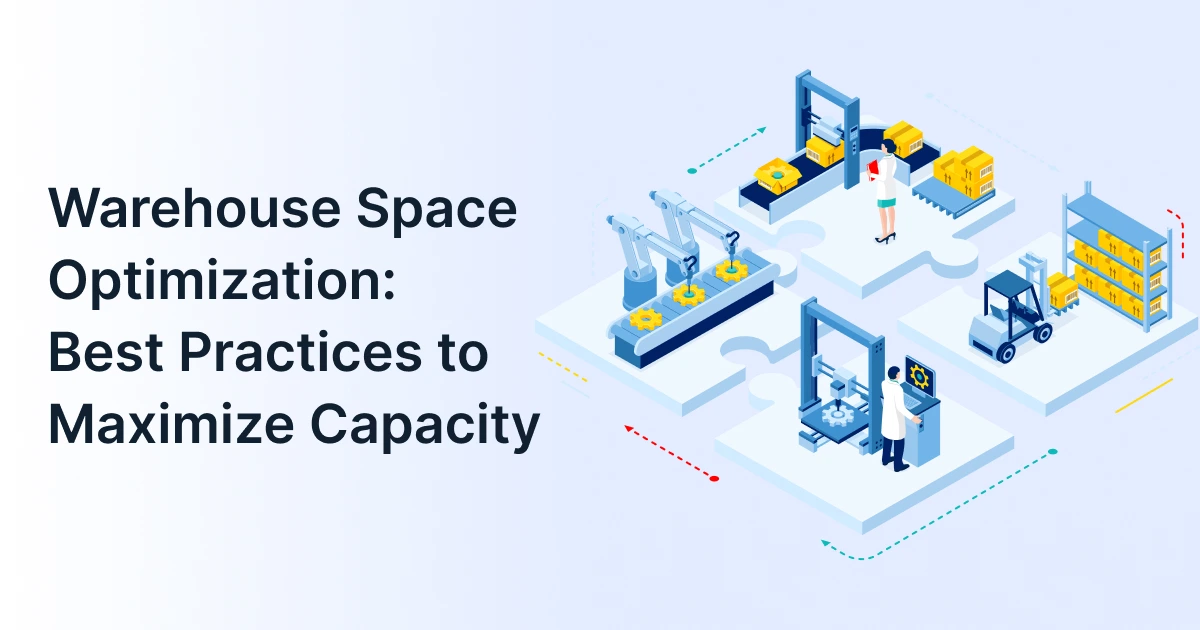
Running out of warehouse space is rarely just a storage problem. It often leads to slower picking, inventory congestion, higher labor costs, and delayed order fulfillment. As customer expectations continue to rise, businesses need smarter warehouse space optimization strategies to make better use of the space they already have.
That is how warehouse space optimization becomes critical. In simple terms, warehouse space optimization is the process of maximizing usable storage capacity while maintaining efficient inventory movement, accessibility, and safe warehouse operations. Instead of investing in a larger facility, companies can improve capacity, efficiency, and inventory flow through better planning, smarter layouts, and technology-driven warehouse optimization. These practices also support better storage optimization across the facility.
In this guide, we’ll walk through some simple strategies that help businesses get more from every square foot while building a strong case for modern warehouse management solutions.

What Is Warehouse Space Optimization and Why Does It Matter?
Warehouse space optimization is the process of maximizing storage capacity and operational efficiency without negatively affecting inventory accessibility, safety, or workflow. It is an important part of broader warehouse optimization, helping businesses make better use of available storage areas without compromising daily operations.
The goal of warehouse space optimization is not to fill every available corner. Instead, every storage location should serve a purpose and support efficient warehouse operations. The same principle applies to smaller storage environments, where storeroom optimization can improve accessibility, organization, and available capacity.
As businesses grow:
- Inventory volumes increase
- SKU counts expand
- Customer delivery expectations become more demanding
Without an optimization strategy, warehouses become crowded and inefficient in the blink of an eye.
Problems of Poor Space Utilization
Many warehouse managers experience symptoms long before identifying the root cause. One of the most common problems of poor space utilization is that inventory begins spilling into staging areas. This often indicates poor storage optimization and inefficient use of available space optimization opportunities. Consequently, pickers spend more time walking and now you are facing shipping delays on a daily basis.
What happens when warehouse space is poorly utilized? Picking takes longer, inventory becomes harder to locate, staging areas become congested, and labor costs can increase. Thus, when warehouse space is poorly managed, productivity suffers across the entire supply chain.
How Does Warehouse Space Optimization Impact Business Performance?
Efficient warehouses help products move faster. Effective warehouse space optimization can:
- Improves picking accuracy
- Reduces travel time
- Minimizes inventory handling
- Supports faster order fulfillment
It also eliminates unnecessary operational costs associated with overflow of storage or facility expansion. For growing businesses, effective warehouse storage optimization can create measurable gains in capacity and efficiency without requiring major capital investment.
Why Is Visibility Critical for Warehouse Optimization?
Storage decisions are only as good as the data behind them. Warehouse managers need visibility into inventory movement, storage occupancy, and SKU velocity to support effective warehouse optimization and storage optimization. Regular audits of storage utilization can uncover underused locations. At the same time, tracking inventory velocity helps place fast-moving products in the most accessible areas.
This is where a modern WMS Solution becomes valuable. It provides real-time visibility into inventory locations, movement, and storage utilization, helping warehouse managers make better space and replenishment decisions.
However, the first step toward warehouse storage optimization is understanding how your existing space is actually being used.
How Can You Improve Your Warehouse Layout for Better Space Utilization?
A well-planned warehouse layout is a key part of warehouse space optimization. It reduces wasted movement, increases storage density, improves space optimization, and supports more efficient warehouse operations. For many businesses, optimizing the layout delivers some of the quickest improvements in warehouse performance. Let’s see how you can improve your current warehouse layout by following a few simple steps.
Evaluate Current Warehouse Layout
This initial assessment is an important part of warehouse optimization because it helps identify where available space is being underused or creating operational constraints.
- Receiving docks
- Picking zones
- Storage locations
- Replenishment routes
- Shipping areas
Look for bottlenecks that create congestion or force employees to travel unnecessary distances. Many businesses reviewing their warehouse layout strategy also explore insights from warehouse management features that improve efficiency, to better understand how visibility supports operational improvements.
Create Logical Inventory Zones
Not all inventories should be stored in the same way. As mentioned earlier, fast-moving products should be located close to picking and shipping areas. Slower-moving inventory can occupy secondary locations. Organizing inventory by demand, size, weight, and handling requirements improves accessibility and supports better storage optimization and warehouse storage optimization.
A simple zoning strategy often creates immediate efficiency gains without requiring additional storage equipment.
Optimize Pick Paths
That makes pick-path planning an important part of warehouse optimization and overall space optimization. To avoid this challenge, groups commonly order products together and position high-demand items near shipping zones.
Using ABC inventory classification can further improve storage decisions. How? Well, simply by assigning premium locations to the most frequently accessed products.
Use Vertical Space Effectively
Many facilities focus on floor space while overlooking available heights. Making better use of vertical capacity is an important warehouse space optimization strategy and can significantly improve warehouse storage optimization. You can utilize the vertical space by taking the following measures.
- Installing taller racking systems
- Adding mezzanines
- Redesigning rack configurations
These steps often create significant additional storage capacity. In most cases, vertical expansion is much more cost-effective than acquiring additional warehouse space.
Why is vertical storage important for warehouse space optimization?
It allows businesses to increase storage capacity without expanding the warehouse footprint, provided the facility has suitable racking, equipment, and safety controls.
Also, regular reviews of rack utilization can reveal opportunities to reclaim unused storage levels. In this section, we’ve seen that the most effective layouts balance storage density with smooth operational flow.

Which Warehouse Space Optimization Techniques Deliver the Biggest Results?
The best warehouse space optimization techniques focus on inventory placement, storage optimization, efficient use of available space, and continuous performance improvement. Small operational changes can often generate substantial results.
Execute Dynamic Slotting
Dynamic slotting assigns storage locations based on product demand rather than permanent placement. This approach supports warehouse optimization by ensuring that frequently accessed inventory is positioned where it can be picked and replenished efficiently.
As SKU movement changes, inventory can be relocated to positions that improve accessibility and picking efficiency. This remains one of the most effective warehouse space optimization techniques for maximizing storage efficiency and productivity.
Eliminate Dead Storage Areas
Every warehouse has overlooked spaces that can become opportunities for space optimization. Some of the unused and overlooked warehouse space include:
- Empty rack sections
- Oversized pallet locations
- Poorly utilized corners
- Inefficient storage configurations
All these reduce usable capacity. Regular storage audits help identify these inefficiencies before they increase operating costs. Even small improvements across multiple locations can add meaningful capacity gains and contribute to long-term warehouse storage optimization.
Improve Inventory Accuracy
Accurate inventory data drives smarter storage optimization and warehouse space decisions. When inventory records are incorrect, products can be misplaced, duplicate stock may accumulate, and available storage locations become difficult to manage.
That’s why consistent cycle counts and automated inventory tracking help maintain data accuracy. A WMS provides real-time inventory visibility that supports better warehouse storage optimization and long-term planning.
For organizations evaluating warehouse technology, WMS functionality and the key features that power modern warehouse operations offer useful insights into the capabilities supporting operational excellence.
Evaluate SKU Performance Regularly
Inventory demand constantly changes, which means warehouse storage strategies cannot remain static. Regular SKU analysis supports ongoing warehouse space optimization by helping businesses identify obsolete products, slow-moving inventory, and changing demand patterns. Removing unnecessary stock frees valuable storage space while improving warehouse efficiency.
Businesses that actively manage inventory portfolios are often more successful at maximizing warehouse space utilization over the long term. In this section, we learned that continuous optimization delivers better results than one-time warehouse improvement projects.
Warehouse Space Optimization
| Challenge | Impact | Recommended Solution |
| Poor inventory placement | Longer picking times | Dynamic slotting |
| Overstocked inventory | Reduced available capacity | Inventory forecasting |
| Inefficient warehouse layout | Excess travel time | Layout redesign |
| Underused vertical space | Lost storage capacity | Vertical racking |
| Poor inventory visibility | Inaccurate storage decisions | WMS-enabled visibility |
| Seasonal inventory spikes | Congestion and temporary capacity shortages | Flexible storage planning |
Key Takeaways
- Warehouse space optimization helps increase storage capacity without expanding facilities.
- A well-designed warehouse layout improves productivity and inventory flow.
- Vertical storage can unlock significant unused capacity.
- Regular inventory reviews support better storage optimization.
- Data-driven decisions improve warehouse optimization and long-term storage optimization.
- A modern WMS helps maintain visibility, accuracy, and scalability.
- Long-term optimization requires continuous improvement, not one-time changes.
According to NetSuite, warehouses typically do not target 100% utilization because businesses must maintain sufficient space for worker safety, equipment movement, order picking, and operational flexibility. The ideal utilization rate depends on inventory turnover, storage systems, and warehouse requirements. Also, the balanced approach is an important consideration in warehouse space optimization, where the goal is not maximum occupancy but efficient and practical use of available capacity. Companies often operate successfully within a balanced utilization range rather than aiming for maximum occupancy.
Industry leaders such as Amazon, DHL, and Sysco continuously refine inventory placement, slotting strategies, and warehouse technology to maintain that balance.
The key takeaway is simple. It is effective warehouse optimization that balances storage capacity with accessibility, safety, and operational flow.
The Buyer’s Journey from Warehouse Constraints to Smarter Operations
Let’s go through the steps a buyer covers from overcoming warehouse challenges to implementing smarter warehouse management strategies.
- Stage 1: Here, the buyer recognizes the problem. You, as a buyer, notice when the warehouse feels crowded, inventory becomes harder to locate, and operating costs start to rise.
- Stage 2: Then you start exploring solutions. You begin evaluating layout optimization, inventory reduction strategies, slotting improvements, and technology platforms.
- Stage 3: Here, you start evaluating different technologies for warehouse optimization, particularly tools that provide better inventory visibility, storage control, and operational insights. You start looking for tools that provide visibility and control. This stage is also where a WMS enters the conversation.
- Stage 4: This is the final stage where it’s time for you to make the decision. The ideal solution should deliver better visibility, improved efficiency, ease of use, and long-term operational value.
Organizations managing multiple facilities often gain additional benefits by learning how multi location warehouse management improves supply chain control.
In this section, we learned that combining warehouse space optimization practices with a cloud-based WMS creates a stronger business case for long-term operational improvement.
Conclusion
By improving warehouse layouts, implementing proven warehouse space optimization techniques, strengthening storage optimization processes, and leveraging a modern WMS, businesses can increase capacity and improve operational performance.
Together, these practices create a more efficient approach to warehouse optimization while helping businesses make better use of every available storage location.
At GrexPro, we believe warehouse technology should simplify operations. Our cloud-based solutions help organizations improve visibility, align workflows, and make informed decisions that support sustainable growth.
We help businesses achieve that balance in warehouse operations and improve decision-making across every stage of the supply chain.
FAQs
Q: What is warehouse space optimization?
A: Warehouse space optimization is the process of improving storage utilization, inventory placement, and workflow efficiency to maximize warehouse capacity without expanding facilities.
Q: Why is warehouse space optimization important?
A: It helps reduce costs, improve inventory accessibility, increase productivity, and support business growth while making better use of existing warehouse resources.
Q: What are the most effective warehouse space optimization techniques?
A: Dynamic slotting, vertical storage, inventory zoning, SKU analysis, and real-time inventory visibility are among the most effective approaches.
Q: How does a WMS support warehouse storage optimization?
A: A WMS provides real-time inventory tracking, location management, utilization reporting, and data-driven insights that improve storage decisions.
Q: What is warehouse capacity optimization?
A: Warehouse capacity optimization focuses on maximizing usable warehouse capacity while maintaining operational efficiency, safety, and accessibility.
Q: How can businesses start maximizing warehouse space utilization?
A: Start by auditing current space usage, reviewing inventory velocity, optimizing warehouse layouts, eliminating dead storage areas, and implementing technology that improves visibility and control.
Q: What is the difference between warehouse optimization and warehouse space optimization?
A: Warehouse optimization focuses on improving overall warehouse efficiency, including inventory movement, picking, replenishment, and workflows. Warehouse space optimization specifically focuses on making the best use of available storage capacity while maintaining accessibility, safety, and operational efficiency.
Q: How do you measure warehouse space utilization?
A: Warehouse space utilization can be measured by comparing occupied storage capacity with the total usable storage capacity of the facility. Businesses should also consider factors such as inventory accessibility, aisle requirements, safety clearances, and operational flow rather than targeting maximum occupancy alone
Author
Managing Director of Grexpro
Surendra Yarrum is a Business Strategist at GrexPro with expertise in ERP, CRM, and warehouse management systems, helping businesses enhance efficiency and optimize supply chain operations.