AI in ERP Software Solutions: The Future of Enterprise Automation

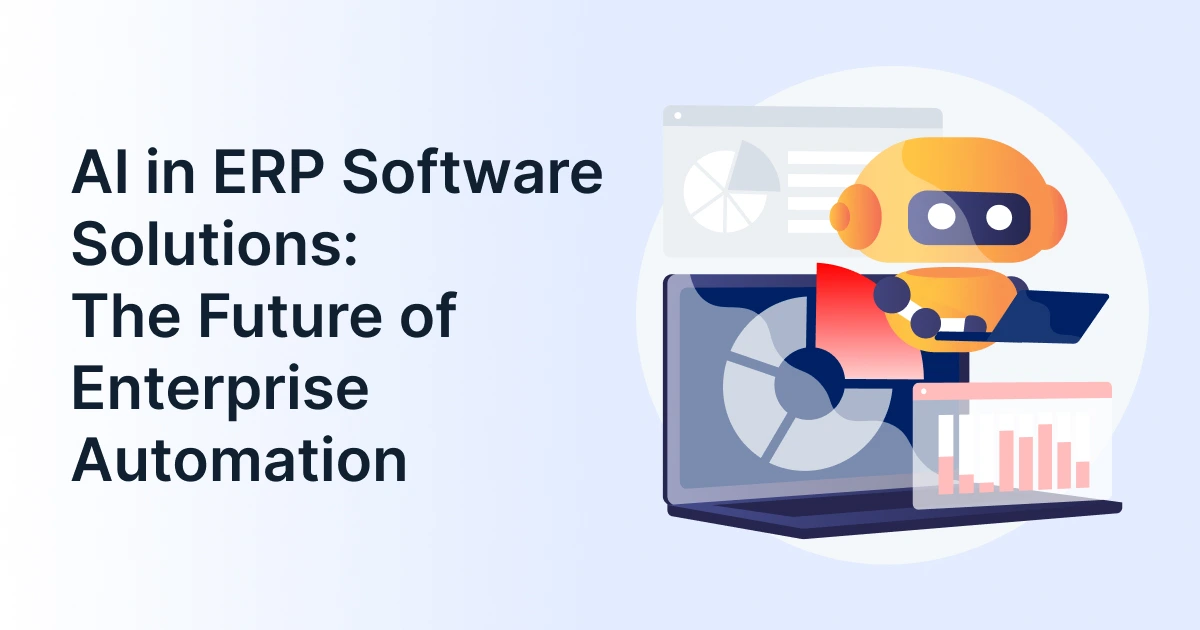
ERP systems have long handled core business processes. They record transactions and manage workflows. They also connect finance, supply chain, sales, and operations.
But business conditions change faster than fixed workflows. Teams need systems that can spot patterns and flag risks. They also need better predictions before making operational decisions. This is where AI ERP software becomes relevant.
An artificial intelligence ERP combines enterprise data with AI capabilities. These capabilities can include machine learning, natural language processing, and predictive analytics. The result is an intelligent ERP that can support more responsive business processes.
The shift is already underway. McKinsey’s 2025 research found that 88% of respondents reported regular AI use in at least one business function. Yet only about one-third said their organizations had started scaling AI programs.
For ERP teams, that gap matters. AI adoption needs to move beyond experiments. It needs to solve real workflow problems.

How Is AI Changing the Role of ERP Software?
AI is shifting ERP from process execution toward assisted decision-making. Traditional ERP systems follow defined rules. They process transactions and produce reports. Users then review those outputs and decide what happens next.
AI ERP software can add another layer.
It can examine large volumes of operational data. It can identify unusual patterns and predict possible outcomes. It can also recommend actions based on those patterns.
| Feature / Capability | Traditional ERP | AI-Enabled ERP |
| Data Focus | Records historical activity | Identifies emerging patterns |
| Logic & Decisioning | Follows predefined rules | Adapts to changing signals |
| Reporting & Output | Produces reports | Generates predictive insights |
| Anomaly Detection | Flags defined exceptions | Detects unusual behavior |
| Decision Support | Supports manual decisions | Recommends possible actions |
This does not make the ERP system unnecessary. It makes the ERP platform more useful for decisions.
For example, a traditional ERP system can show that inventory is falling. An intelligent ERP can detect the trend earlier. It can then flag a possible stockout. That distinction defines modern ERP automation.
Rather than automating everything, try to automate the right decisions and tasks.
What Happens Inside an AI-Enabled ERP Workflow?
AI works best when it is connected to reliable ERP data and business rules.
An AI ERP software setup can bring together data from finance, inventory, procurement, sales, and operations. AI models can then analyze that information within the relevant workflow.
The process usually follows four stages.
Stage 1: The ERP system provides business context
The ERP software already contains operational information. This can include orders, invoices, inventory, suppliers, payments, and production data. That data gives AI the context needed for useful analysis.
Stage 2: AI identifies patterns and exceptions
An artificial intelligence ERP can examine historical and current information. It can identify unusual transactions or changing demand patterns. For example, it may detect repeated delays from one supplier.
Stage 3: AI generates an insight
The system can then produce a recommendation. It might suggest reviewing a purchase order. It could also flag a cash flow risk.
Stage 4: The workflow takes the next step
Approved recommendations can trigger ERP automation. This could involve creating a task or routing an exception. It could also update a workflow for human review.
This approach makes ERP tools more useful. Users spend less time searching for problems. They can focus more on decisions that need judgment.
Which ERP Processes Benefit Most From AI?
The strongest AI use cases sit inside repetitive, data-heavy workflows. Not every ERP process needs AI. The best opportunities usually involve large data volumes, recurring decisions, or frequent exceptions.
| ERP function | AI use case | Potential business value | Data required | Human oversight |
| Finance | Invoice classification | Reduce manual processing | Invoice + vendor data | Exception review |
| Inventory | Demand forecasting | Improve replenishment planning | Sales + inventory history | Planner validation |
| Procurement | Supplier risk detection | Earlier risk identification | Supplier + PO history | Procurement review |
| Manufacturing | Production forecasting | Better planning | Production + inventory data | Operations approval |
| Sales | Demand signals | Better forecasting | Order/customer history | Sales/finance review |
Finance: reduce manual exception handling
Finance teams process large numbers of invoices and transactions. AI ERP software can help classify documents and identify unusual entries.
It can also support reconciliation and cash-flow analysis. This makes ERP automation useful beyond basic data entry.
Supply chain: anticipate changes earlier
Supply chains depend on timely decisions. Demand can change before teams update their plans. Predictive analytics in ERP can examine historical demand and current order signals. It can highlight possible inventory pressure.
An artificial intelligence ERP can also identify supplier or delivery patterns. This can help teams review risks before they affect customers.
Procurement: improve purchasing decisions
Procurement teams manage suppliers, orders, prices, and contracts. An intelligent ERP can identify unusual pricing patterns. It can also highlight supplier performance changes.
This creates opportunities for targeted ERP automation. Instead of reviewing every transaction manually, teams can focus on exceptions.
Manufacturing: connect planning with operational signals
Manufacturing creates large volumes of operational data. Production schedules, inventory, quality, and machine information all affect decisions. AI ERP software can help identify production patterns. It can also support maintenance and capacity decisions.
This makes the ERP platform more responsive to operational changes.
Sales and order management: act on demand signals
Sales teams need accurate information about orders and customers. An artificial intelligence ERP can analyze buying patterns and order activity. Predictive analytics ERP can support demand and revenue forecasts. It can also identify changes that deserve attention.
The benefit is not automation alone. It is faster access to useful information.
Why Does Predictive Analytics Matter in ERP?
Predictive analytics helps ERP teams look ahead instead of only reviewing history.
- Traditional reports answer a basic question: What happened?
- Business intelligence can then explore: Why did it happen?
- Predictive analytics in ERP adds another question: What could happen next?
This makes predictive analytics ERP useful for planning and risk management.
| Business Area | Historical View | Predictive View |
| Inventory | Current stock | Possible shortages |
| Sales | Past orders | Demand trends |
| Finance | Previous payments | Cash-flow patterns |
| Procurement | Supplier history | Potential supplier risks |
| Production | Past output | Possible capacity issues |
For example, an AI ERP software system could detect repeated demand increases before a stockout occurs. The prediction is not a guarantee. It is a signal for action. That distinction matters when using predictive analytics ERP for business planning.
Good ERP solutions should help users understand why prediction matters. They should also provide enough context for users to validate the recommendation. This is where human oversight remains important.
What Makes an ERP System Truly Intelligent?
An intelligent ERP connects AI insights directly with business processes. Adding a chatbot to an ERP platform does not automatically create an intelligent ERP.
The system needs deeper connections between data, decisions, and workflows.
A useful intelligent ERP should provide four capabilities:
- Context: It understands relevant business data.
- Prediction: It identifies possible future outcomes.
- Recommendation: It suggests practical next steps.
- Execution: It can support approved workflow actions.
This is also where ERP automation becomes more valuable. A basic automation follows a fixed rule. AI can help determine when that rule should apply.
For example, an ERP system may automatically route an invoice. An AI layer can first identify unusual invoices. The workflow then changes based on the detected exception. This creates more adaptive ERP automation.

Can AI Replace Traditional ERP Systems?
AI is more likely to extend ERP capabilities than replace the ERP foundation.
An ERP system remains responsible for core business records and processes. It manages transactions, workflows, permissions, and operational data. AI works on top of that foundation.
An artificial intelligence ERP can analyze those records. It can identify patterns and generate recommendations. It can also support workflow decisions. That means businesses still need reliable ERP software.
They also need accurate data and defined business processes. The future is therefore less about AI replacing ERP. It is about AI making ERP solutions more responsive.
What Should Businesses Check Before Adopting AI ERP Software?
Businesses should evaluate data, workflows, governance, and measurable outcomes first. AI does not fix weak business processes automatically. Poor data can also produce unreliable results.
Before choosing AI ERP software, assess these areas:
| Area | What to Check |
| Data | Is the data accurate and consistent? |
| Processes | Are workflows clearly defined? |
| Integration | Can systems exchange relevant data? |
| Governance | Who approves AI-driven actions? |
| Security | How is business data protected? |
| Measurement | Which outcomes will define success? |
Governance deserves special attention.
NIST’s AI Risk Management Framework highlights characteristics such as reliability, security, transparency, explainability, privacy, and accountability. These principles can guide the use of AI ERP software.
Businesses should also decide where human approval is required. Not every AI recommendation should trigger automatic action.
A phased approach can help. Start with one measurable workflow. Track the outcome. Then expand ERP automation where the results support it.
Conclusion
The future of ERP software is not simply more automation. It is more context-aware automation.
AI ERP software can help businesses identify patterns and predict changes. It can also support faster decisions across finance, procurement, supply chain, and manufacturing.
That makes predictive analytics ERP an important part of modern enterprise planning. At the same time, an intelligent ERP still needs reliable data and human oversight.
GrexPro brings cloud-based ERP solutions to businesses across industries. Its SaaS technology platform supports B2B operations, ERP, WMS, CPQ, and other cloud needs.
The opportunity is clear. Businesses can move from recording what happened to understanding what may happen next.
FAQs
Q: What is AI ERP software?
A: AI ERP software combines ERP processes with artificial intelligence. It can analyze business data, identify patterns, support predictions, and automate selected workflows. It can help teams make faster decisions using information already available within their ERP environment.
Q: What is artificial intelligence ERP?
A: Artificial intelligence ERP refers to ERP software enhanced with AI capabilities. These can include machine learning, natural language processing, anomaly detection, and predictive analytics. The goal is to improve decisions and automate suitable business processes.
Q: What is an intelligent ERP?
A: An intelligent ERP uses AI to make ERP processes more responsive. It can identify patterns, predict possible outcomes, and recommend actions. The best systems connect those insights directly with business workflows.
Q: How does ERP automation use AI?
A: ERP automation uses AI to identify patterns and exceptions. It can then recommend or trigger workflow actions. This differs from fixed automation, which usually follows predefined rules.
Q: What is predictive analytics ERP?
A: Predictive analytics ERP uses business data to estimate possible future outcomes. It can support demand forecasting, inventory planning, supplier analysis, cash-flow planning, and other operational decisions.
Q: Can AI replace an ERP system?
A: AI is unlikely to replace the core role of an ERP system. ERP manages transactions, records, workflows, and business rules. AI adds prediction, analysis, recommendations, and advanced ERP automation around those processes.
Q: What should businesses look for in AI ERP tools?
A: Businesses should assess data integration, workflow support, security, governance, scalability, and reporting. The right ERP tools should solve defined business problems. They should also provide measurable value rather than adding AI features without a clear use case.
Author
Managing Director of Grexpro
Surendra Yarrum is a Business Strategist at GrexPro with expertise in ERP, CRM, and warehouse management systems, helping businesses enhance efficiency and optimize supply chain operations.