 17th February 2026
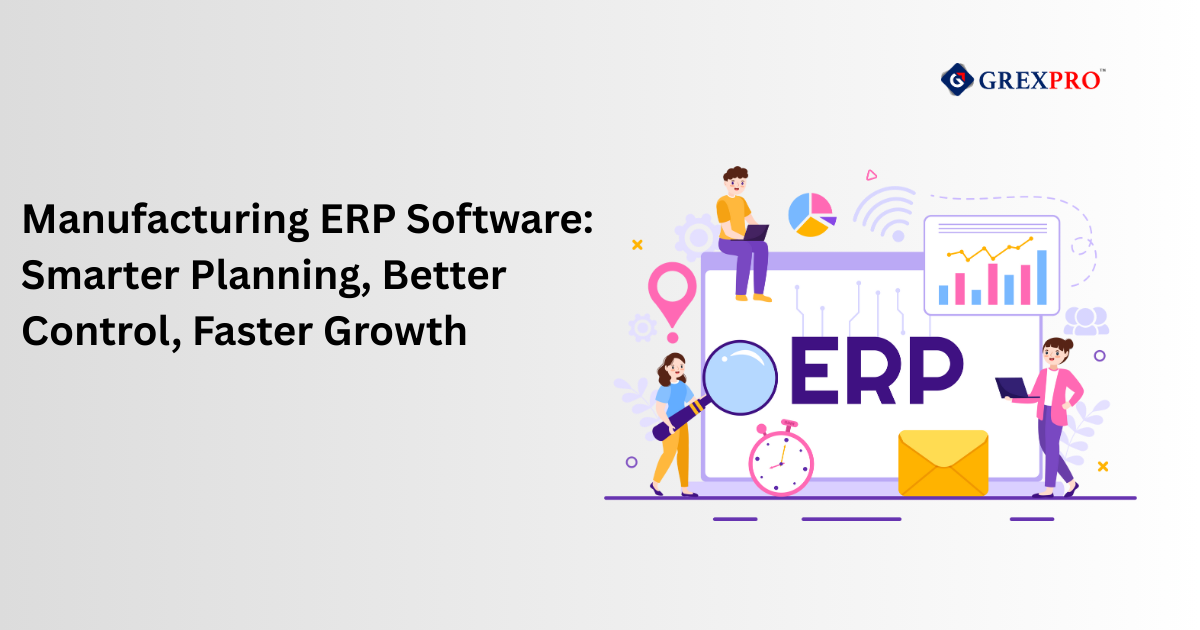
Manufacturing ERP Software: Smarter Planning, Better Control, Faster Growth
Summary
Manufacturers struggling with disconnected systems, inventory inaccuracies, and production delays need integrated visibility. Manufacturing ERP software solves this by centralising planning, finance, and operations into one unified system. The result is smarter planning, stronger cost control, and scalable growth supported by structured ERP MRP systems.
The Operational Gap Holding Manufacturers Back
Modern manufacturers can work in a context of unstable demand, disruptions within the supply chain, and increased cost pressures. A good number of them continue to use disconnected tools, spreadsheets, or older systems which restrict visibility. This division slows down the production cycles and the rate of error. A modern manufacturing ERP software platform is one that will fill this gap as it centralises planning, inventory, finance, and operations in a single system. It helps leaders make decisions supported by data instead of responding to change.
According to industry research, operational efficiency of a company could increase by up to 30% upon strategic implementation of digital transformation initiatives. However, success is based on process and technology alignment. There is where manufacturing structured ERP systems can be of a quantifiable effect. They minimize silos, enhance accountability, and develop standard workflow processes within different departments.
What Makes Manufacturing ERP Software Different from Generic ERP
Shop-floor complexity is not met in generic ERP solutions. The manufacturing environment demands profound production planning, bill of materials management, demand forecasting and material tracking. An ERP specifically designed to handle manufacturing combines all these functions along with procurement, warehouse management, and financial reporting. It streamlines planning and execution and eliminates interdepartmental data inconsistencies.
ERP MRP systems are the central point of these platforms. Their material requirements are calculated according to the production schedules, lead times and demand forecasts. This minimizes stock outs and inventory. Solutions existing today also have real-time dashboards and automatic alerts. Such ERP features enable the production managers to predict the delays before they occur. The outcome is that it provides increased cycle times and better cost control throughout the value chain.
Streamline Operations & Drive Smarter Growth
Looking to optimize workflows, reduce inefficiencies, and scale faster? Discover how GrexPro’s intelligent solutions can transform the way your business works.
Key Capabilities That Drive Measurable Results
A robust manufacturing ERP platform delivers more than automation. It transforms operational visibility. Below is a snapshot of capabilities that directly impact performance outcomes.
| Capability | Operational Impact | Business Outcome |
| Demand Forecasting | Predicts material needs | Reduced stockouts |
| Production Scheduling | Optimises machine time | Higher throughput |
| Inventory Control | Real-time tracking | Lower carrying costs |
| Quality Management | Traceability and compliance | Fewer defects |
| Financial Integration | Unified reporting | Faster decision-making |
Organisations that combine planning and financial data record high returns in operational accuracy. By linking production information with accounting, when producing ERP software, the leadership can understand margins on a product and order basis. This disclosure enhances the pricing and investment plans.
How to Successfully Implement Manufacturing ERP Software (Step-by-Step Guide)
Technology adoption must be structured. Below is a practical implementation framework manufacturer can follow.
Step 1: Conduct an Operational Audit
Map existing workflows and identify inefficiencies. Focus on bottlenecks in inventory, planning, and reporting.
Step 2: Define Measurable KPIs
Set clear goals such as improving inventory accuracy to 95% or reducing production delays by 20%.
Step 3: Choose Scalable ERP Systems for Manufacturing
Select a solution aligned with your production complexity and growth goals. Ensure it includes integrated ERP MRP systems.
Step 4: Phased Deployment
Start with high-impact modules such as production and inventory before expanding to finance and analytics.
Step 5: Train Teams and Monitor Adoption
User adoption determines ROI. Continuous monitoring ensures sustained improvement. Companies that follow structured deployment strategies report faster return on investment and smoother transitions.
From Planning to Precision: The Role of ERP MRP Systems
The MRP is still a pillar of manufacturing excellence. The conventional planning systems tend to be based on fixed spreadsheets. These are liable to manual mistakes and obsolete assumptions. Contemporary ERP MRP programs are automated to calculate based on real-time demand pulse. They match the purchase of raw materials against the real production plans.
Working capital is less pressurized by this integration. It also improves collaboration between suppliers. An ERP system well installed in manufacturing assures that teams in procurement, manufacturing and warehouse are governed by one source of truth. Predictive analytics also enhances better accuracy of forecasts. The enhanced responsiveness of the supply chain and a decrease in lead time are some of the benefits reported by companies that have implemented digital planning systems. Smoother customer fulfilment and brand reputation are the direct results of the correct material planning.
Why Small Manufacturers Need Enterprise-Grade Tools
There is a misconception that advanced ERP platforms are only for large enterprises. Scalable manufacturing software for small business is increasingly accessible. Smaller manufacturers face the same challenges as larger firms, including fluctuating demand and compliance requirements. Without structured systems, growth becomes chaotic.
Manufacturing cloud-based ERP systems have flexible implementation. They minimize initial infrastructure expenses and make upgrade easier. This enables the small businesses to enjoy sophisticated production planning, inventory control, and reporting applications without using large amounts of cash. The system grows with the operations being increased. The centralisation of operations enhances financial discipline and consistency of operations. The development turns into being regulated instead of responsive.
Implementation Strategy: Turning Technology into Tangible Value
Technology alone does not guarantee transformation. Implementation must align with business goals and operational maturity. A structured approach includes process mapping, stakeholder training, and phased deployment. When implementing manufacturing ERP software, companies should prioritise high-impact modules such as production planning and inventory management.
Below is a simplified implementation roadmap:
- Assess operational bottlenecks and data gaps.
- Define measurable KPIs tied to production efficiency.
- Configure workflows aligned with existing processes.
- Train cross-functional teams for adoption.
- Monitor performance metrics continuously.
Organisations that adopt phased strategies report smoother transitions and faster ROI. Structured rollouts minimise disruption and encourage cultural alignment with digital systems.
Quantifying the Business Impact
Financial performance is associated with digital maturity. Manufacturers that use integrated ERP as a manufacturing platform generally achieve success in key performance indicators. The metrics below indicate the common post implementation trends in all industries.
| Metric | Before ERP | After ERP |
| Inventory Accuracy | 75–80% | 95%+ |
| Production Delays | Frequent | Reduced by 20–30% |
| Order Fulfilment Time | Extended | Shortened significantly |
| Data Reporting Time | Days | Real-time |
When planning modules integrate with ERP MRP systems, decision cycles shorten. Managers move from reactive firefighting to proactive optimisation. This shift strengthens resilience in volatile markets.
Emerging Trends Shaping Manufacturing ERP Software
The manufacturing technology of the future is data driven. The performance standards are being redefined with the help of artificial intelligence, integration of internet of things, and predictive analytics. The current ERP software systems used in manufacturing are adding machine data and real-time production analytics. This facilitates proactive maintenance and automatic quality inspections.
Remote access and secure collaboration are also supported by cloud architecture. With the growth of hybrid work models, Erp systems enabled to operate in the cloud enable executives to supervise manufacturing activities remotely. Another emerging concern is sustainability tracking. Manufacturers are now in need of systems that quantify energy usage and carbon impact as well as financial measures. The advances in technology guarantee that the ERP keeps gaining strategic value and not as a back-office application.
Ready to transform your business operations?
Discover how our comprehensive solutions can streamline your workflows, boost productivity, and drive sustainable growth.
Why Grexpro Aligns with Modern Manufacturing Needs
Grexpro competes as an operational excellence technology partner. The company is interested in the provision of structured, scalable solutions to complex manufacturing environments. Its strategy incorporates planning, inventory, finance, and analytics into a unified digital structure.
Grexpro assists the manufactures who want to grow in a controlled environment with the domain knowledge and state-of-the-art system design. Its solutions are designed to respond to the enterprise work and manufacturing software to satisfy the small business requirements. It focuses on transparency, performance measures, and scalability. This systematic approach is in line with the current manufacturing focus where agility and visibility is the measure of competitive advantage.
Conclusion: From Operational Complexity to Strategic Control
Manufacturers relying on fragmented tools face limited visibility and slower decisions. A unified manufacturing ERP software platform integrates planning, production, and finance into one ecosystem, improving efficiency and cost control. With integrated ERP MRP systems, materials and schedules align with real-time demand, reducing waste and enhancing responsiveness. In evolving markets, scalable ERP frameworks are essential for sustainable and measurable growth.
If your organisation aims to improve production planning, inventory accuracy, and financial clarity, it may be time to evaluate a structured ERP roadmap. Explore how a modern manufacturing ERP framework can align operations with long-term growth objectives.
Visit grexpro.com to understand how integrated solutions can support smarter planning and better control across your manufacturing ecosystem.
FAQs:
Q: What problems does manufacturing ERP software solve?
A: Manufacturing ERP software eliminates data silos, improves production planning, enhances inventory accuracy, and provides real-time visibility across operations, helping manufacturers reduce costs and increase efficiency.
Q: How are ERP systems for manufacturing different from standard ERP solutions?
A: ERP systems for manufacturing include specialised modules such as production scheduling, bill of materials, shop-floor control, and integrated ERP MRP systems, which generic ERP platforms often lack.
Q: Is ERP for manufacturing suitable for small businesses?
A: Yes. Modern cloud-based manufacturing software for small business is scalable and cost-effective, enabling smaller manufacturers to manage planning, inventory, and finance efficiently without heavy infrastructure investment.
Q: How do ERP MRP systems improve production planning?
A: ERP MRP systems automate material requirement calculations based on demand forecasts and production schedules, reducing stockouts, excess inventory, and delays in manufacturing cycles.
Q: Why should manufacturers consider Grexpro for ERP implementation?
A: Grexpro provides structured, scalable ERP solutions tailored to manufacturing environments, focusing on operational visibility, process integration, and long-term growth alignment.


 Surendra Yarrum