ERP Implementation Cost: Budget, Pricing Factors & Hidden Costs

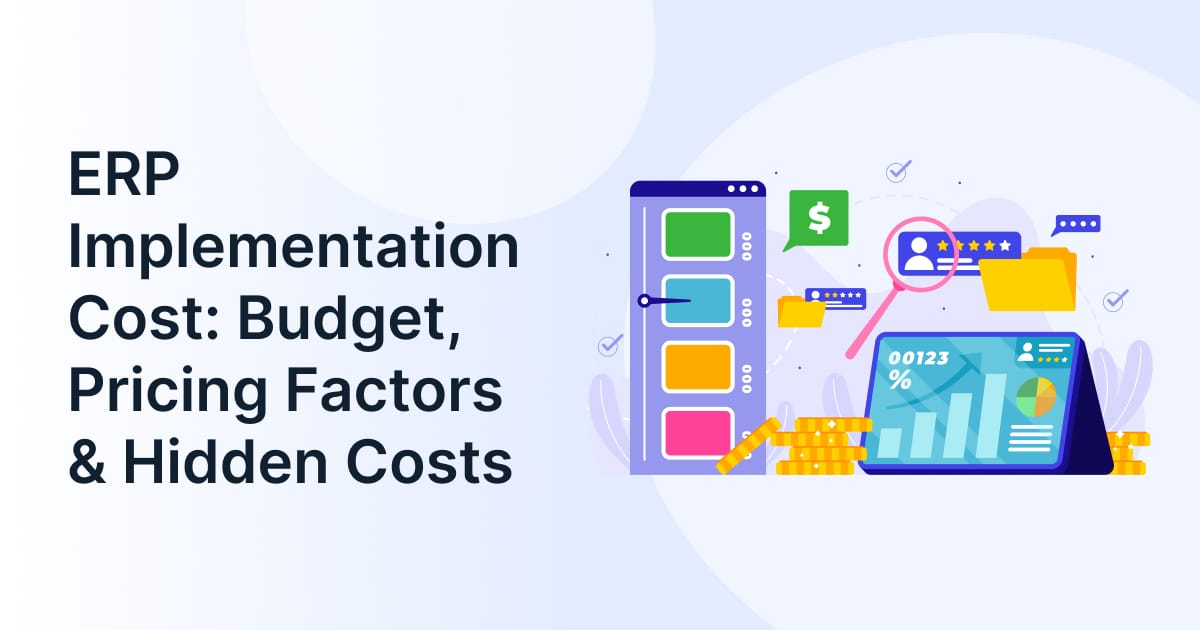
Planning an ERP investment involves more than comparing software prices. Businesses must account for implementation services, data migration, employee training, integrations, and ongoing support. Without a complete estimate, the initial budget may fall short of the actual investment.
Understanding ERP implementation cost helps businesses evaluate vendors, prioritize essential features, and prepare for long-term expenses. The final amount depends on business size, operational complexity, deployment choices, and the level of customization required.
This guide breaks down ERP pricing, overlooked expenses, and practical budgeting steps to help you plan your investment with greater confidence.
How Much Does ERP Implementation Cost?
ERP implementation cost varies significantly based on the platform, business requirements, and implementation scope. A smaller deployment with standard workflows generally requires less investment than a multi-location rollout involving complex integrations and custom development.
According to the Texas Comptroller of Public Accounts’ ERP funding plan, the estimated funding required for its statewide ERP project was approximately USD 285.7 million. This included USD 248.5 million in projected costs and a 15% contingency of USD 37.3 million, covering pre-implementation services, implementation, and ongoing support over seven years. The estimate illustrates why ERP budgeting should account for the full project lifecycle rather than software costs alone.
These figures are illustrative benchmarks, not universal prices. Actual quotes depend on the ERP system, region, licensing model, and project requirements.
Here are the main components to consider when estimating your budget:
| Cost Component | What It Covers |
| ERP software | Licenses or subscription fees |
| Implementation services | Consulting, configuration, and deployment |
| Data migration | Data cleanup, mapping, and transfer |
| Integrations | Connections with existing business systems |
| Training | Employee onboarding and change management |
| Ongoing expenses | Support, maintenance, and upgrades |
How much does ERP implementation cost for a typical business?
ERP implementation can cost thousands to millions of dollars, depending on the business’s size and requirements. To estimate your investment, calculate software fees, implementation services, migration, integrations, training, and ongoing support separately.
For ERP implementation costs for mid-sized businesses, the scope of operations matters as much as employee count. Multiple warehouses, manufacturing processes, financial entities, and custom reporting can increase implementation effort considerably.

What Factors Influence ERP Implementation Pricing?
Two businesses can select the same ERP platform and receive very different implementation quotes. The difference usually comes down to how much work is required to configure the system for each business.
ERP Scope, Modules, and Customization
An ERP system may support finance, procurement, inventory, manufacturing, and supply chain operations. Businesses that need more modules or specialized workflows may incur higher implementation costs.
Customization can also increase development, testing, and maintenance expenses. Using standard functionality wherever practical can help control spending.
Users, Locations, and Integrations
Some ERP tools charge based on users, modules, or usage. Businesses operating across several locations may also need additional configuration, reporting, and access controls.
Integrating ERP software with existing CRM, e-commerce, warehouse management, or accounting systems adds another cost consideration. The effort depends on available connectors, data compatibility, and integration complexity.
Cloud vs. On-Premises Deployment
Cloud ERP typically uses a subscription model, reducing the need for businesses to maintain their own application servers. However, subscription fees and certain implementation services still require budgeting.
On-premises ERP may involve software licenses, infrastructure, security, and internal IT resources. Neither approach is automatically cheaper over time. Compare the total cost of ownership across several years before deciding.
Why do ERP implementation quotes differ so much between vendors?
Quotes differ because vendors may include different modules, implementation hours, migration services, integrations, training, and support. Compare proposals against the same requirements and deliverables instead of choosing solely by the lowest initial price.
What Are the Hidden Costs of ERP Implementation?
Hidden ERP costs are expenses that businesses overlook or that fall outside the initial vendor quote. They often emerge during data preparation, customization, deployment, and post-launch operations.
Data Migration and Cleanup
Legacy systems often contain duplicate records, inconsistent formats, and outdated information. Cleaning, mapping, validating, and transferring this data takes time and technical effort.
Ask vendors whether their quotes cover data preparation, migration testing, and reconciliation.
Employee Training and Change Management
Employees need time to learn new workflows and use the ERP platform correctly. Training sessions, documentation, temporary productivity losses, and change management can increase the overall investment.
Underfunding this area may also reduce adoption and delay the expected business benefits.
Additional Customization and Integration Work
Requirements may change after implementation begins. New reports, workflow changes, additional connectors, and unexpected compatibility issues can generate extra charges.
Post-Launch Support and Maintenance
Deployment is not the end of ERP spending. Businesses may need technical support, upgrades, performance improvements, and additional training after launch.
What is the hidden cost in ERP?
Common hidden costs include data cleanup, additional customization, integration changes, employee training, lost productivity, and post-launch support. These expenses may not appear in the initial quote, so businesses should confirm exclusions and plan a contingency.
How Should Mid-Sized Businesses Budget for ERP Implementation?
Mid-sized businesses often need to balance immediate costs with the need to support growth. A practical budget should separate initial implementation expenses from recurring ownership costs.
Separate One-Time and Recurring Expenses
Start by estimating software subscriptions or licenses, implementation services, migration, integrations, and training. Then calculate recurring subscription fees, support, maintenance, and upgrade expenses.
Include internal staff time, since employees involved in testing and deployment may have less time for their regular responsibilities.
Add a Risk-Based Contingency
Set aside funds for uncertain requirements, additional testing, and changes discovered during implementation. The appropriate allowance depends on project complexity, data quality, and how clearly requirements are defined.
Use this budgeting formula:
Total ERP budget = Software + Implementation + Migration + Integrations + Training + Infrastructure + Ongoing costs + Contingency.
How should a mid-sized business calculate its ERP implementation budget?
List every expected cost, separate one-time expenses from recurring charges, and confirm vendor inclusions and exclusions. Estimate internal resource requirements and add a contingency based on identified project risks.
How Can You Reduce ERP Setup Cost Without Compromising Functionality?
Reducing ERP setup cost does not mean cutting essential features or choosing a platform that cannot support your business.
Consider these practical steps:
- Prioritize essential modules: Implement capabilities that address immediate operational needs first.
- Limit unnecessary customization: Use standard workflows when they meet business requirements.
- Prepare data early: Clean and validate existing records before migration.
- Use available integrations: Evaluate standard connectors before commissioning custom development.
- Compare equivalent proposals: Check deliverables, implementation hours, support, and exclusions.
Phased deployment may also spread investment over time. However, confirm that separate phases will not create expensive integration work or duplicate effort.
How can I reduce ERP implementation costs without affecting business operations?
Define requirements early, prioritize essential functionality, prepare data before migration, and minimize avoidable customization. Compare vendor proposals using the same scope and evaluate long-term ownership costs alongside initial pricing.

What Should You Check Before Approving an ERP Quote?
Before approving an ERP implementation proposal, verify that the pricing reflects the complete project’s scope.
Use this checklist:
- Are all required modules and users included?
- Does the quote cover data migration and validation?
- Are integrations, testing, and employee training included?
- What are the recurring subscription and support charges?
- How are scope changes and additional development billed?
- What post-launch support does the vendor provide?
What should an ERP implementation quote include?
A detailed quote should identify software fees, implementation deliverables, migration, integrations, training, testing, payment milestones, recurring charges, support terms, and exclusions. It should also explain how additional requirements will affect pricing.
Conclusion
ERP implementation cost depends on much more than the software price. Business requirements, data quality, customization, integrations, and ongoing support all influence the final investment.
By examining each cost component, comparing equivalent vendor proposals, and planning for overlooked expenses, businesses can make better-informed decisions.
GrexPro helps businesses explore cloud-based technology solutions for evolving operational needs. Evaluate your requirements, understand your expected investment, and choose an approach that supports your business goals.
FAQs
Q: What are ERP implementation costs?
A: ERP implementation costs include the services and resources required to configure, deploy, and prepare an ERP system for use. They may cover consulting, migration, integrations, testing, training, and deployment support.
Q: What is the hidden cost in ERP?
A: Common hidden costs include data cleanup, additional customization, employee training, productivity losses, integration changes, and post-launch support. Confirm these expenses before approving a vendor’s quote.
Q: Is ERP implementation more expensive than ERP software?
A: Implementation can cost more than the software license or subscription, particularly when significant customization, migration, and integration work is required. The ratio varies by project.
Q: Does cloud ERP cost less than on-premises ERP?
A: Cloud ERP often reduces upfront infrastructure spending but involves recurring subscription fees. On-premises ERP may require servers, maintenance, and internal IT resources. Compare costs over several years.
Q: How long does ERP implementation take, and how does time affect cost?
A: Timelines depend on business size, data complexity, integrations, customization, and resource availability. Longer projects may require more consulting hours and internal staff time, increasing the overall investment.
Author
Managing Director of Grexpro
Surendra Yarrum is a Business Strategist at GrexPro with expertise in ERP, CRM, and warehouse management systems, helping businesses enhance efficiency and optimize supply chain operations.