 9th June 2026
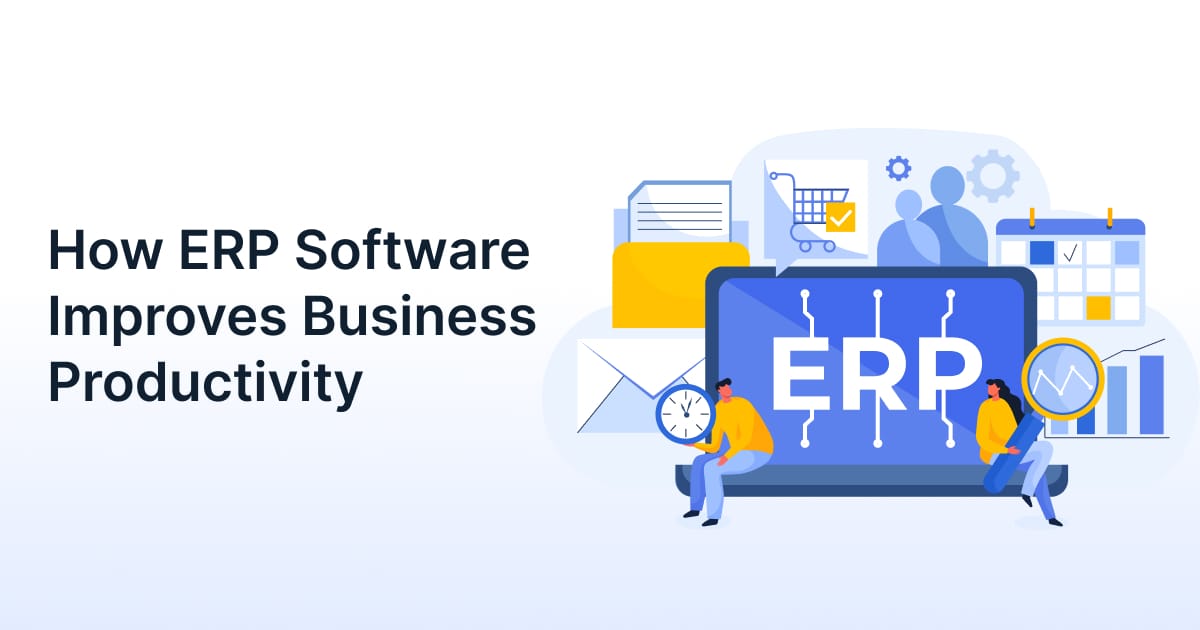
How ERP Software Improves Business Productivity
Introduction
To improve ERP productivity, businesses need a centralised system that automates workflows, streamlines operations & provides real-time insights. ERP software improves operational efficiency by integrating departments, reducing manual processes & enabling faster decision-making across the organisation.
Today’s fast-moving business environment demands smarter systems that eliminate inefficiencies and enable collaboration. This is where enterprise resource planning software plays a critical role. By bringing all core processes, finance, HR, supply chain & inventory, into one unified platform, ERP business software simplifies operations and boosts performance.
If you’re considering modern ERP solutions, exploring tools like GrexPro ERP can help you unlock measurable productivity gains while future-proofing your operations.
Key Summary
- ERP productivity improves through automation and integration
- Real-time insights enhance decision-making
- Workflow automation reduces delays and errors
- ERP software improves operational efficiency across industries
- Scalable systems support long-term growth
Key Statistics on ERP Productivity
“Businesses can reduce operational costs by up to 23% using ERP systems.”
Source: https://www.netsuite.com/portal/resource/articles/erp/what-is-erp.shtml
What Is ERP Productivity and Why Does It Matter?
To improve business efficiency, you need ERP productivity, which refers to the measurable gains achieved through automation, integration & real-time visibility enabled by ERP systems.
ERP productivity ensures that your teams spend less time managing data and more time driving value. Instead of disconnected tools, businesses rely on a single enterprise resource planning platform to synchronise operations.
Why it matters –
- Eliminates data silos
- Improves collaboration across teams
- Enables faster and more accurate decision-making
- Enhances reporting and compliance
Streamline Operations & Drive Smarter Growth
Looking to optimize workflows, reduce inefficiencies, and scale faster? Discover how GrexPro’s intelligent solutions can transform the way your business works.
How Does ERP Software Improve Operational Efficiency?
To enhance efficiency, you need ERP systems that optimise workflows, reduce redundancy & provide real-time insights across operations.
ERP software improves operational efficiency in several ways –
- Business process automation: Eliminates repetitive tasks
- Workflow automation: Ensures faster approvals and task execution
- Data centralisation: Creates a single source of truth
For instance, an integrated inventory management system ensures accurate stock tracking and demand forecasting, preventing both overstocking and shortages.
How Does Business Process Automation Boost Productivity?
To maximise output with minimal effort, you need business process automation that removes repetitive manual tasks and standardises operations across departments.
ERP systems automate key business processes, making them faster and more reliable –
- Data entry automation: Instead of manually entering the same data across systems, ERP ensures information flows automatically between modules, reducing duplication and errors.
- Invoice processing: Automated billing reduces human intervention, speeds up payments, and improves cash flow accuracy.
- Order management: Orders are processed, tracked & fulfilled in real time without manual follow-ups, improving customer satisfaction.
By reducing reliance on manual work, ERP enables teams to focus on strategic tasks like planning, innovation & customer experience. For advanced automation insights, explore our blog on AI Inventory Management: Predicting Demand Accurately.
Why Is Workflow Automation Critical in ERP Systems?
To streamline operations end-to-end, you need workflow automation that ensures tasks move efficiently through predefined processes.
- Automated approvals: Reduces delays by eliminating manual approvals and ensuring faster decision-making.
- Task routing: Assigns tasks to the right people automatically, improving accountability.
- Real-time alerts: Keeps teams updated on progress or bottlenecks, avoiding operational slowdowns.
These capabilities directly contribute to improved ERP productivity benefits and faster execution across teams.
How Do ERP Systems Integrate Business Processes Seamlessly?
To create a connected business environment, you need ERP systems that unify all departments into a single integrated platform.
ERP achieves seamless integration through –
- Centralised databases: All departments, finance, HR & operations, access the same real-time data, ensuring consistency and accuracy.
- Cross-functional workflows: Actions in one department (e.g., sales orders) automatically trigger processes in others (e.g., inventory and billing).
- Unified reporting: Businesses gain a 360-degree view of operations, making strategic planning more effective.
This level of integration eliminates miscommunication and ensures that every department works in sync. To know more about it you can read How ERP Modules Integrate Business Processes Seamlessly.
ERP Productivity Benefits Across Industries
To maximise ROI, businesses across sectors adopt ERP systems tailored to their operational needs, unlocking higher efficiency, scalability & control.
From manufacturing to retail, ERP adapts to different workflows while maintaining consistent benefits like automation, data visibility & improved coordination. It ensures every function, from procurement to delivery, operates seamlessly within one ecosystem.
Industry-wise benefits
Manufacturing –
An erp system for manufacturing improves production planning, resource allocation, and quality control. Manufacturing ERP Software: Smarter Planning blog explains this in further details.
Retail & Distribution –
- Inventory optimisation
- Faster order fulfilment
- Demand forecasting
Service Industry –
- Efficient resource management
- Improved client servicing
In the long run, ERP not only improves operational workflows but also builds a strong foundation for scalable growth and digital transformation across industries.
ERP vs Traditional Systems
| Feature | Traditional Systems | ERP Software |
| Data Management | Siloed | Centralised |
| Automation | Limited | Advanced |
| Visibility | Low | Real-time |
| Scalability | Restricted | High |
| Productivity Impact | Moderate | Significant |
Did You Know?
“Companies that implement ERP systems report up to 30% improvement in operational efficiency.”
Source: https://www.panorama-consulting.com/resource-center/erp-report/
What Are Common Challenges and How ERP Solves Them?
To overcome inefficiencies, you need ERP systems that address core business challenges like data silos, manual processes & lack of visibility.
Common challenges –
- Data silos: Different departments often use separate tools, leading to inconsistent data. ERP centralises all information into one system, ensuring data accuracy and transparency.
- Manual errors: Human errors in data entry, calculations & reporting can lead to costly mistakes. ERP automation reduces these errors significantly by standardising processes.
- Limited visibility: Without real-time insights, decision-making becomes delayed and reactive. ERP dashboards provide live data, enabling proactive decisions.
- Inefficient workflows: Manual approvals and disconnected processes slow down operations. ERP introduces workflow automation to streamline tasks and eliminate bottlenecks.
By solving these challenges, ERP ensures smoother operations and improved business productivity software performance.
Ready to transform your business operations?
Discover how our comprehensive solutions can streamline your workflows, boost productivity, and drive sustainable growth.
How to Choose the Right ERP Software for Your Business?
To select the right ERP, you need to align system capabilities with your business goals and operational requirements.
Key factors to evaluate –
- Industry-specific features
- Integration capabilities
- Scalability
- Ease of use
- ROI potential
Choosing the right ERP solutions ensures long-term success and sustainable productivity growth.
Conclusion
ERP systems are no longer optional; they are essential for businesses aiming to scale efficiently and stay competitive. By enabling business process automation, improving workflows & providing real-time insights, ERP significantly enhances ERP productivity.
If you’re ready to transform your operations and unlock higher efficiency, now is the time to adopt a smarter ERP solution. Take the next step and contact GrexPro.
FAQs
Q: What is ERP productivity?
A: ERP productivity refers to improved business performance achieved through integrated systems that automate processes and provide real-time insights. It reduces manual work, enhances efficiency & enables faster decision-making across departments.
Q: How does ERP software improve business productivity?
A: ERP software improves productivity by automating workflows, centralising data & eliminating duplication. It ensures better collaboration, reduces errors & allows teams to focus on high-value tasks rather than routine processes.
Q: What industries benefit most from ERP systems?
A: Industries like manufacturing, retail, logistics & services gain significant benefits. For example, an ERP system for manufacturing improves production planning, inventory management & overall operational control.
Q: What is workflow automation in ERP?
A: Workflow automation in ERP refers to automating tasks such as approvals, notifications & assignments. It ensures tasks move efficiently without manual intervention, reducing delays and improving accountability.
Q: How does ERP help in inventory management?
A: ERP integrates inventory management systems to track stock levels in real time, forecast demand & optimise supply chains. This prevents stockouts and overstock situations, improving efficiency.
Q: Is ERP suitable for small businesses?
A: Yes, modern ERP systems are scalable and can be customised for small businesses. They help streamline operations, improve efficiency & prepare businesses for future growth.

 Surendra Yarrum