 11th March 2026
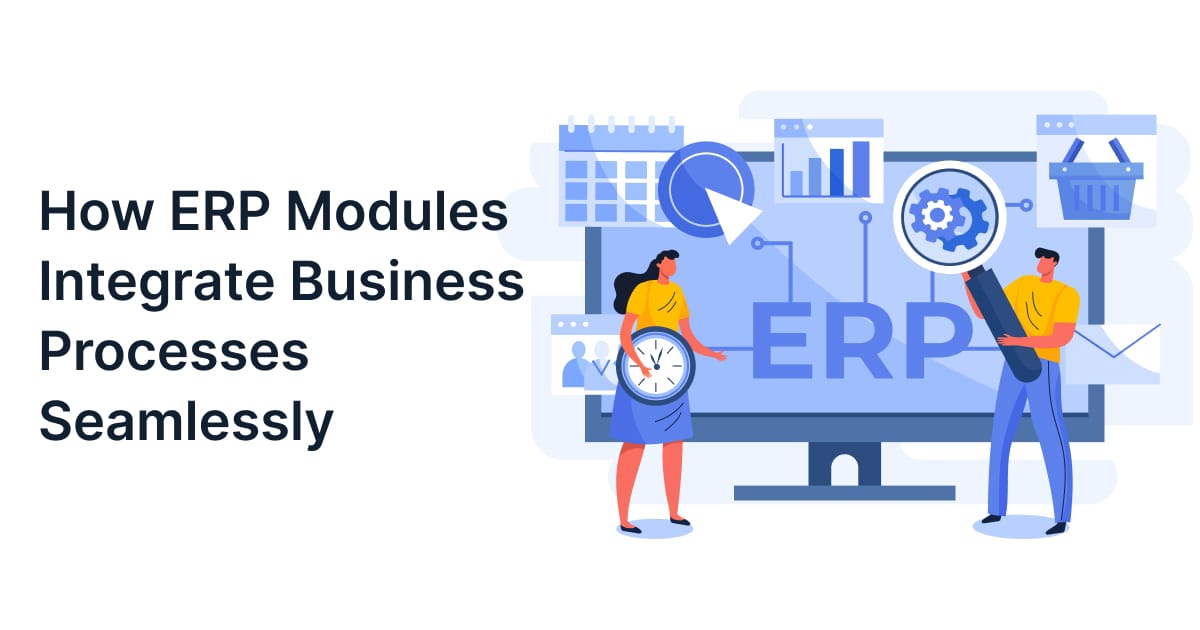
How ERP Modules Integrate Business Processes Seamlessly
Summary
A purchase order is approved by procurement, but inventory teams still wait for updates. Manufacturing plans production based on outdated stock data. Finance receives invoices that don’t match purchase records.
When departments rely on disconnected systems, workflows become slow and inefficient.
This is where ERP modules make a difference.
Enterprise Resource Planning platforms integrate multiple business functions into one system. Instead of separate tools for procurement, manufacturing, finance, and logistics, companies use ERP system modules that share the same data and processes.
From the ERP procurement module to the ERP manufacturing module, each module connects business operations so information flows automatically across teams.
In this guide, we explain how ERP modules integrate business processes, the key ERP system modules organizations rely on, and how integrated ERP platforms improve operational efficiency.
What Are ERP Modules?
ERP modules are individual components within an Enterprise Resource Planning system designed to manage specific business functions.
Each module focuses on a different operational area, such as procurement, finance, manufacturing, or supply chain management.
However, unlike standalone software, ERP system modules are connected through a centralized database.
This means:
- Procurement data updates inventory automatically
- Manufacturing plans adjust based on supply availability
- Finance records transactions linked to operational activities
Because the system shares data across modules, businesses gain real-time visibility across operations.
Streamline Operations & Drive Smarter Growth
Looking to optimize workflows, reduce inefficiencies, and scale faster? Discover how GrexPro’s intelligent solutions can transform the way your business works.
Why ERP Module Integration Matters
Many organizations operate with disconnected software tools for procurement, inventory, finance, and production planning.
This creates operational challenges such as:
- Duplicate data entry
- Poor cross-department visibility
- Slow reporting cycles
- Increased operational errors
- Limited decision-making insights
When ERP modules integrate business processes, departments no longer operate in silos.
Instead, workflows become connected.
For example:
- Procurement orders automatically update inventory records
- Production schedules adjust based on material availability
- Financial reports reflect real operational activity
Organizations exploring modern ERP platforms often evaluate essential ERP system features that support integrated business operations.
At a Glance: Common ERP System Modules
| ERP Module | Purpose | Example Business Function |
| ERP Procurement Module | Manages purchasing workflows | Supplier management and purchase orders |
| ERP Manufacturing Module | Controls production planning | Production scheduling |
| ERP Supply Chain Management Module | Tracks logistics and inventory | Warehouse management |
| Finance Module | Handles accounting processes | Financial reporting |
| HR Module | Manages workforce data | Payroll and employee management |
These ERP system modules work together to create a unified operational environment where data flows automatically between departments.
How ERP Modules Work Together
The real value of ERP systems lies in integration between modules.
Instead of isolated workflows, ERP platforms allow departments to collaborate using shared data.
Procurement and Supply Chain Integration
The ERP procurement module manages supplier relationships, purchase requests, and vendor transactions.
Once procurement orders materials, the ERP supply chain management module updates inventory records and logistics planning.
This ensures warehouses and supply chain operations remain aligned with purchasing activities.
Manufacturing and Inventory Integration
The ERP manufacturing module connects production planning with inventory and procurement data.
If manufacturing requires additional materials, the system can automatically generate procurement requests.
Production schedules also update inventory levels in real time.
Finance and Operations Integration
ERP systems also connect financial data with operational activities.
For example:
- Procurement transactions update expense accounts
- Manufacturing activities affect production cost reporting
- Supply chain activities influence revenue forecasting
This integration improves financial accuracy and operational transparency.
| Did You Know? |
| Organizations that adopt integrated ERP platforms often improve operational visibility because data flows automatically between departments instead of being manually transferred between systems. |
| This allows leadership teams to access more accurate reports and make faster decisions. |
Popular ERP Modules Used by Enterprises
Modern ERP platforms provide multiple modules that support different operational functions.
| ERP Module | Key Function | Business Benefit |
| Procurement Module | Supplier and purchasing management | Improved vendor control |
| Manufacturing Module | Production planning and scheduling | Better operational efficiency |
| Supply Chain Module | Inventory and logistics management | Improved demand forecasting |
| Finance Module | Accounting and financial reporting | Real-time financial insights |
| HR Module | Workforce management | Streamlined HR operations |
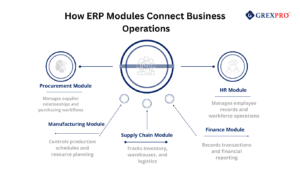
Enterprise platforms such as Dynamics ERP modules or GrexPro ERP systems offer integrated capabilities across these operational areas.
Organizations planning ERP adoption often follow a structured ERP implementation checklist to ensure successful deployment.
“The most dangerous kind of waste is the waste we do not recognize.” — Shigeo Shingo |
ERP systems help organizations identify operational inefficiencies by providing visibility into business processes.
When Should Businesses Implement ERP Modules?
Organizations typically consider ERP systems when operational complexity grows.
Common signals include:
- Expanding supply chains
- Increasing procurement operations
- Growing manufacturing requirements
- Lack of real-time operational visibility
- Multiple disconnected software tools
Understanding the future of ERP also helps companies prepare for modular ERP architectures and intelligent automation capabilities.
Ready to transform your business operations?
Discover how our comprehensive solutions can streamline your workflows, boost productivity, and drive sustainable growth.
Conclusion
ERP modules play a critical role in connecting business operations across departments.
Instead of operating with disconnected tools, organizations use ERP system modules to integrate procurement, manufacturing, supply chain, and finance workflows into one unified system.
This integration improves visibility, reduces operational inefficiencies, and supports better decision-making.
Companies adopting modern ERP platforms are better positioned to manage complex operations and scale their businesses effectively.
Ready to Integrate Your Business Processes?
Disconnected systems slow down operations and create data silos.
GrexPro ERP helps organizations integrate procurement, manufacturing, supply chain, and financial workflows into a unified platform.
Explore how GrexPro ERP solution can help your organization streamline operations and gain complete visibility across business processes.
FAQs
Q: What are ERP modules?
A: ERP modules are components within an enterprise resource planning system that manage different business functions such as procurement, manufacturing, finance, and supply chain operations.
Q: What is the ERP procurement module?
A: The ERP procurement module manages supplier relationships, purchasing processes, and purchase order workflows.
Q: What does the ERP manufacturing module do?
A: The ERP manufacturing module supports production planning, scheduling, and resource management.
Q: What is an ERP supply chain management module?
A: The ERP supply chain management module tracks inventory, logistics, and warehouse operations.
Q: How do ERP modules integrate business processes?
A: ERP modules integrate processes by sharing data through a centralized system, allowing workflows and transactions to update automatically across departments.

 Surendra Yarrum