 26th May 2026
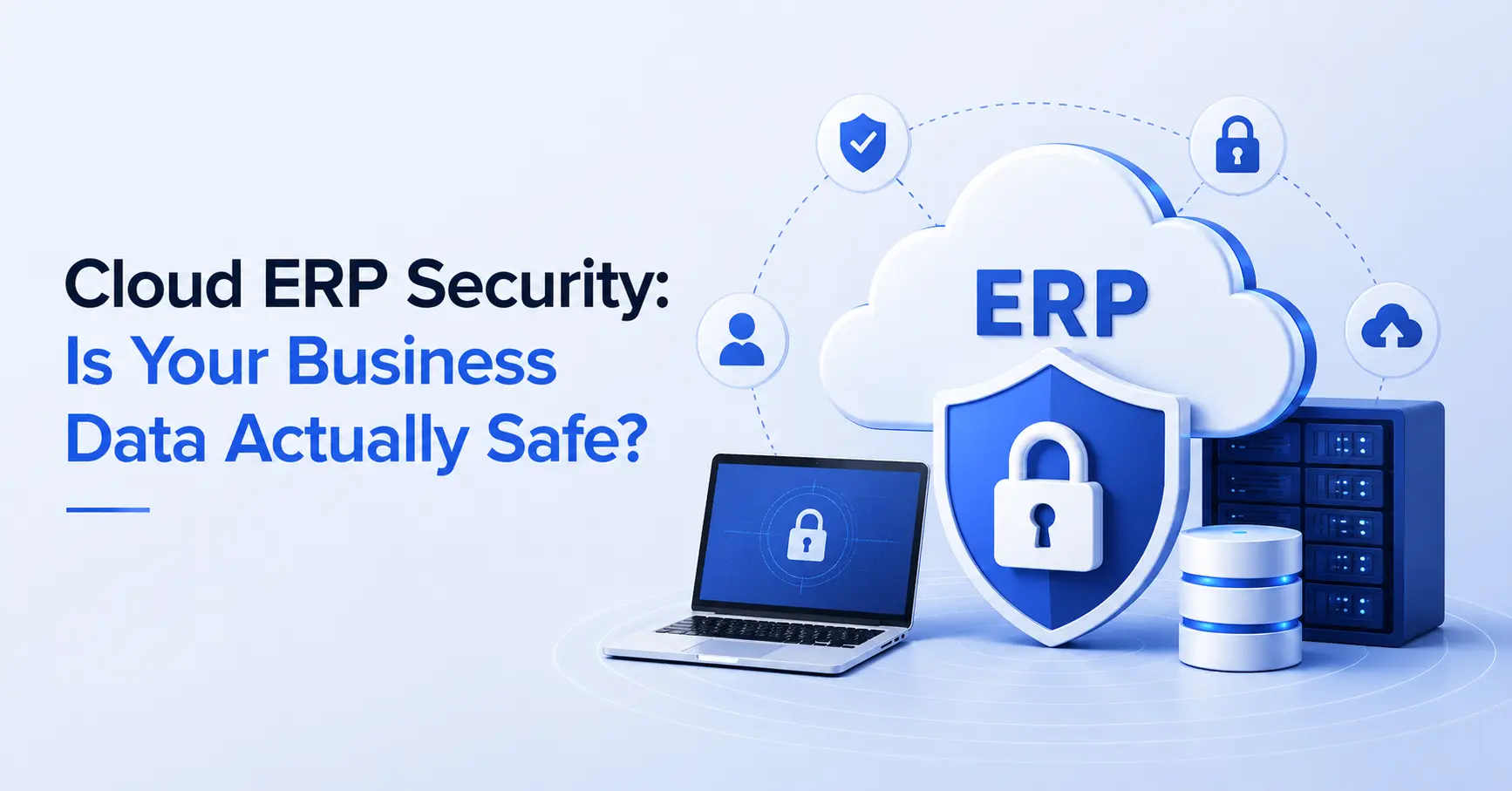
Cloud ERP Security: Is Your Business Data Actually Safe?
Summary:
You are likely sending your most sensitive tech packs, original CAD files, and costing margins across the globe via unencrypted emails, assuming your vendor network is secure. This post dissects the critical vulnerabilities exposing your intellectual property and outlines the essential framework for robust ERP security to protect your global operations. By migrating to a unified system, sourcing leaders can lock down multi-entity data, mitigate modern threats, and eliminate the chaotic risks of disconnected spreadsheets.
Cloud ERP Security: Is Your Business Data Actually Safe?
A complete tech pack, including proprietary fabric blends and target profit margins, sits in the inbox of a factory manager in Dhaka. That manager’s email password is “123456.” If that single account is compromised, your entire upcoming seasonal line falls into the hands of competitors before the first prototype is even cut.
This is not hypothetical. Supply chains are notoriously leaky. Sourcing directors and supply chain VPs are drowning in operational complexity, often ignoring the gaping holes in their foundational data infrastructure. You cannot scale a global apparel brand on scattered spreadsheets without inviting catastrophic data loss. True ERP security requires a deliberate strategy. By the end of this breakdown, you will understand exactly how to plug these operational leaks, mitigate severe cloud erp security risks, and enforce strict erp security requirements across your entire global vendor base.
The Illusion of Safety in Legacy Supply Chain Systems
Many apparel brands operate under a dangerous assumption. They believe that because they have worked with the same vendors for a decade, their data is inherently safe. This complacency is the enemy of robust erp cyber security.
The Hidden Dangers of Email and Spreadsheets
Sending unencrypted Bill of Materials (BOMs) over standard email is a massive liability. When you attach a spreadsheet to an email, you lose all control over where that file goes, who forwards it, and who downloads it. This lack of control fundamentally undermines your erp system security. If you are struggling with these chaotic workflows, understanding common ERP implementation pitfalls is the first step toward building a secure, centralized data environment.
The On-Premise Myth
There is a persistent belief that keeping servers “in-house” provides superior protection. The reality is quite the opposite. Maintaining on-premise servers often leaves you more vulnerable to modern threats because internal IT teams rarely have the resources to patch vulnerabilities as rapidly as dedicated cloud providers. Embracing cloud erp security shifts the burden of infrastructure defense to experts who monitor threats around the clock.
Streamline Operations & Drive Smarter Growth
Looking to optimize workflows, reduce inefficiencies, and scale faster? Discover how GrexPro’s intelligent solutions can transform the way your business works.
Identifying the Real Cloud ERP Security Risks
When we talk about supply chain vulnerabilities, we are not just talking about theoretical hackers in dark rooms. We are talking about practical, daily operational failures.
The Operational Autopsy: The VF Corp Supply Chain Disruption
In late 2023, apparel giant VF Corporation (parent company of Vans, Supreme, and The North Face) suffered a massive ransomware attack. Bad actors encrypted critical IT systems and stole sensitive data. The breach forced the company to shut down systems, severely disrupting their fulfillment operations right during the holiday season. The operational autopsy is clear: when legacy systems lack compartmentalization, a single point of entry can paralyze an entire global supply chain. This event starkly highlights the devastating reality of cloud erp security risks.
Intellectual Property Leakage
Your designs are your most valuable asset. Without stringent ERP security protocols, unprotected design files and grading patterns routinely end up on unauthorized factory servers. This IP leakage erodes your competitive advantage and invites counterfeit production.
“Supply chains are vulnerable to a wide range of risk… Managing cyber supply chain risks requires ensuring the integrity, security, quality and resilience of the supply chain and its products and services.”
— National Institute of Standards and Technology (NIST)
Unauthorized Vendor Visibility
A broken system creates accidental transparency. If your costing sheets and margin data are not locked down, factories might see competitor pricing, unapproved margins, or internal buyer notes. This unauthorized visibility destroys your negotiating power. According to IBM’s Cost of a Data Breach Report, the average cost of a data breach reached $4.45 million in 2023. You cannot afford weak erp cyber security.
Non-Negotiable ERP Security Requirements for Brands
To protect your margins and IP, you must demand a modern infrastructure. Meeting fundamental erp security requirements is no longer optional for sourcing leaders.
- Granular Role-Based Access Control (RBAC)
Role-based access is the cornerstone of effective erp system security. A pattern maker in Vietnam should only see their specific task, not your global revenue projections. An inspector logging an AQL report should not have access to factory costing negotiations.
- End-to-End Data Encryption
Your data must be protected both at rest and in transit across international borders. Leading apparel brands align their cloud erp security posture with globally recognized standards, such as the ISO/IEC 27001 standard for information security management, ensuring their vendor communications remain impenetrable.
- Automated Audit Trails
You need a tamper-proof record of who changed a fabric cost, who approved a compliance document, and who downloaded a tech pack. Automated audit trails provide the transparency necessary for elite erp cyber security.
| Feature | Spreadsheets & Email | Modern Cloud ERP Security |
| Access Control | None. Anyone with the file can view/edit. | Granular RBAC limits visibility by vendor/role. |
| Audit Trails | Non-existent. Changes are untraceable. | Automated, time-stamped logs of all activity. |
| Data Encryption | Files are sent in plain text over open networks. | End-to-end encryption for data in transit and at rest. |
| IP Protection | High risk of unauthorized forwarding and theft. | Centralized viewing without unauthorized download access. |
Securing Multi-Entity Operations Across Borders
As your retail brand scales globally, the complexity of your data protection must scale with it.
- Isolating Subsidiary Data
Growing brands must enforce tight data boundaries across multiple global subsidiaries. Using advanced multi-entity management architectures, you can keep regional operations functionally separate while maintaining top-level financial visibility. This isolation is a critical component of advanced erp system security.
- Secure Vendor Portals
Replacing risky email chains with encrypted, single-source-of-truth vendor portals is the most effective way to eliminate cloud erp security risks. Vendors log into a secure hub, interact only with the data they are authorized to see, and log out.
Ready to transform your business operations?
Discover how our comprehensive solutions can streamline your workflows, boost productivity, and drive sustainable growth.
Building a Resilient Supply Chain Data Fortress
Transitioning to a secure infrastructure does not mean halting your production cycle. You must move from reacting to data leaks to preventing them natively within your software. Upgrading your ERP security means embedding protection directly into your daily procurement and design workflows. Discovering how modern solutions power scalable growth allows you to build a fortress around your data without slowing down your speed to market. You must prioritize comprehensive erp security requirements at every stage of the product lifecycle.
Conclusion
Securing your supply chain is fundamentally about protecting your competitive advantage. Relying on outdated spreadsheets and unencrypted emails exposes your intellectual property and profit margins to entirely preventable threats. By establishing strict role-based access and centralizing your vendor communications, you regain total control over your operational data. If your internal teams are spending more time worrying about leaked tech packs than negotiating better margins, it is time to reach out to our supply chain specialists to design a secure, composable architecture.
FAQ
Q: What are the biggest cloud erp security risks for apparel brands?
A: The most significant cloud erp security risks include intellectual property theft via unencrypted tech packs and unauthorized vendor access to internal profit margins. Without centralized controls, bad actors can easily intercept global supply chain communications.
Q: How do we establish proper erp security requirements?
A: Establishing rigorous erp security requirements begins with enforcing Role-Based Access Control (RBAC) and end-to-end encryption. Sourcing directors must ensure that vendors can only access the specific data necessary to execute their current production tasks.
Q: Why is erp cyber security different from basic IT security?
A: While basic IT security protects your internal company network, robust erp cyber security extends that protection across external borders to hundreds of third-party manufacturing partners. It specifically secures the transactional data and complex workflows unique to global supply chains.
Q: Does cloud erp security protect multi-entity operations?
A: Yes, advanced cloud erp security isolates data between different subsidiaries and regional brands. This ensures that while executive leadership maintains global visibility, individual business units and their respective vendors cannot access each other’s sensitive financial data.
Q: How do we upgrade our erp system security without pausing production?
A: You upgrade erp system security by migrating vendor communications from chaotic email threads into dedicated, encrypted collaboration portals. This transition centralizes your data instantly, establishing high-level ERP security without disrupting daily factory floor operations.

 Surendra Yarrum