Why is Supply Chain Visibility the Ultimate Competitive Advantage in 2026?

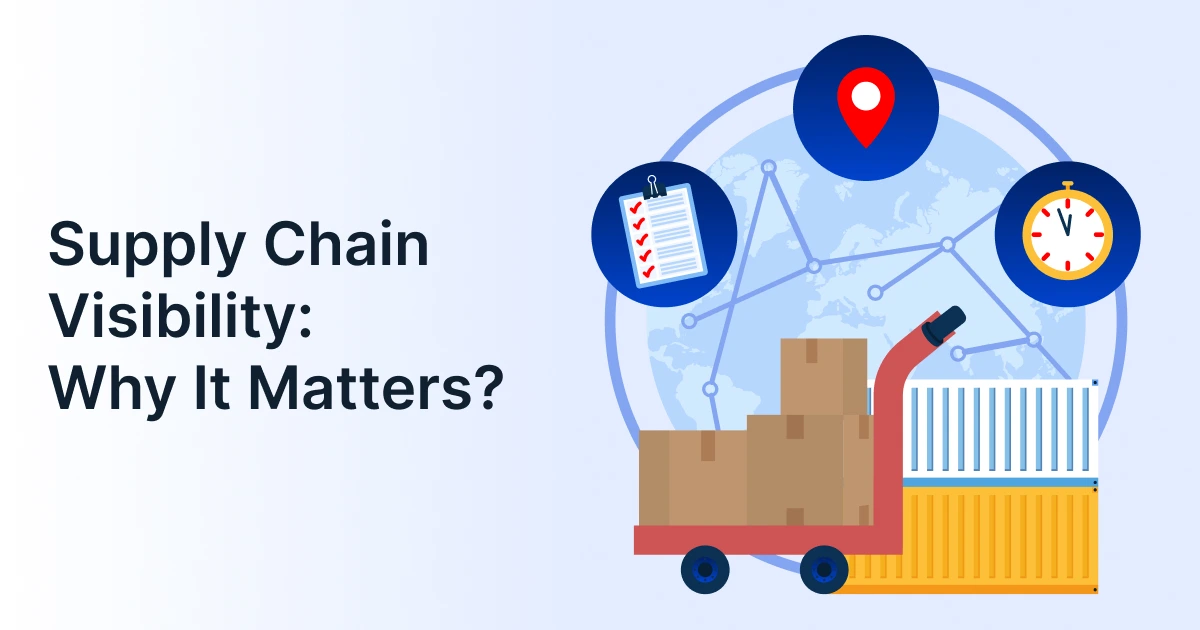
It is a fact that most supply chains run smoothly until an emergency comes up. One day, everything looks fine: orders are moving, inventory levels seem healthy, and customers are happy. Most supply chains appear predictable until a supplier misses a shipment, a vessel is delayed, or severe weather disrupts a transportation route. By the time the problem becomes visible, production may already be slowing, and customers may already be asking for updates.
Supply chain visibility changes that equation. Instead of reacting after a disruption occurs, businesses can monitor suppliers, inventory, warehouses, transportation, and customer deliveries in a connected view and identify potential issues earlier. This is exactly why gaining visibility into supply chain logistics through modern ERP and WMS integration has become one of the biggest priorities in visibility supply chain management.
In 2026, businesses do not just need products moving from Point A to Point B. They need to know what is happening at every point in between. They need comprehensive global supply chain visibility that connects suppliers, inventory, warehouses, logistics partners, and customer deliveries into a single pane of glass.
We have all seen how quickly disruptions can spread. Geopolitical tensions affect global trade routes. Maritime choke points regularly raise concerns about energy supply chains. Localized disruptions like the Pune-Mumbai monsoon season create severe manufacturing and transportation delays. The businesses that recover fastest usually have one thing in common: strong supply chain collaboration and visibility. When you can see problems early, you have time to act. In today’s volatile market, that time makes all the difference.

What Is Supply Chain Visibility?
At its core, what is supply chain visibility? Supply chain visibility is the ability to track and understand inventory, orders, suppliers, shipments, warehouse activity, and deliveries across the supply network using connected, timely data. It provides live access to data regarding inventory levels, shipment statuses, supplier pipelines, production schedules, and customer deliveries.
Simply put, if a customer asks where their order is, or a plant manager asks why production is delayed, you should be able to answer instantly. That is the true value of supply chain visibility.
| Supply Chain Stage | Core Data Feeds to Visibility Engine | Visibility Engine Outputs |
| 1. Suppliers & Procurement | Raw material status, purchase order tracking, vendor lead times | Automated Risk Alerts
(Early warnings for delays, bottlenecks, weather disruptions, or inventory shortages) |
| 2. Warehouse & Inventory | Real-time stock levels, bin-level tracking, inbound receiving updates | |
| 3. Transportation & Freight | Live carrier GPS tracking, transit milestones, route updates | Proactive Decisioning
(Actionable insights for dynamic rerouting, stock rebalancing, and accurate customer ETAs) |
| 4. End Customer Delivery
| Last-mile status updates, delivery confirmations, ETA changes | _ |
According to enterprise research by SAP, supply chain visibility helps organizations monitor inventory, tracking status, warehouse operations, and production data to create significantly more responsive and resilient operations.
Why is Real-Time Visibility a Business Necessity?
Modern supply chains move too fast for assumptions. Businesses need real-time information to make confident decisions and avoid costly surprises. The days of waiting for weekly Excel reports are long gone. If something changes today, you need to know it immediately. That is where real-time logistics visibility becomes invaluable.
Disruptions Are Harder to Predict
Supply chains are bigger and more interconnected than ever. You may source from multiple countries, rely on regional freight partners, and serve customers who demand next-day delivery. When one link breaks, the domino effect is immediate. Common disruption triggers include:
- Geopolitical Events: Trade policy shifts and international conflicts impacting sourcing.
- Extreme Weather: Floods, storms, and monsoons stranding ground and ocean transport.
- Supplier Constraints: A minor component delay causing assembly line downtime.
- Market Fluctuations: Rapidly shifting consumer demand outstripping static forecasts.
- Cybersecurity Risks: Ransomware and system outages halting warehouse execution systems.
The more operational complexity you manage, the more vital supply chain visibility solutions become.
Modern Customers Demand Total Transparency
Think about your own buying habits. When you order an item online, you expect real-time tracking, accurate delivery windows, and proactive alerts. B2B and B2C buyers increasingly expect greater transparency into order status, delivery timelines, and potential delays. Without robust logistics visibility service tools, customer support teams waste hours looking for updates. Modern buyers expect:
- Live Status Updates: Immediate order location and transit milestones.
- Proactive Alerts: Early notification if a bottleneck occurs.
- Precise ETAs: Accurate delivery estimates rather than multi-day windows.
- Operational Transparency: Authentic data that builds long-term commercial trust.
Reliable delivery information and proactive communication can strengthen customer trust and support long-term retention.
According to research published by Gartner, organizations that invest in real-time inventory visibility in supply chain networks achieve up to a 20% reduction in overall operational costs by mitigating emergency expedites and reducing buffer stock.
The Hidden Costs of Poor Visibility
Operating with limited visibility creates stock imbalances, unnecessary freight costs, and sluggish decision-making. The real risk is not the initial disruption. It lies in discovering it too late.
Operational Blind Spots & Inventory Imbalances
A common example is one fulfillment center experiencing stockouts while another facility holds excess safety stock. Without timely inventory visibility, businesses may not recognize the imbalance until it becomes expensive to correct. This happens constantly without live inventory visibility in supply chain management. When teams rely on siloed spreadsheets, they run into:
- Costly Stockouts: Unavailability leading to abandoned carts and lost revenue.
- Overstocking & Holding Costs: Capital tied up in slow-moving inventory.
- Forecasting Errors: Inaccurate demand models driven by stale historical data.
- Manual Data Errors: Disconnected systems creating conflicting reports.

How to Improve Supply Chain Visibility Across Operations?
Improving visibility requires connecting systems, automating workflows, sharing operational data, and adopting technology built for real-time insights. The goal is not to collect more data. It is making data actionable.
Unify Your Tech Stack with ERP & WMS
Many visibility gaps stem from functional silos. Sales operate in one tool, logistics in another, and the warehouse in a third. Integrating ERP and WMS creates an important foundation for supply chain visibility by connecting planning, inventory, procurement, and warehouse execution data.
At GrexPro, we have helped businesses dramatically improve supplier visibility and warehouse control by synchronizing their operational tech stack. Exploring modern GrexPro WMS Solutions enables smooth inventory tracking, optimized slotting, and total operational transparency.
Key benefits include:
- Centralized Information: A single accurate dataset across all departments.
- Precise Stock Control: Live, bin-level inventory accuracy.
- Workflow Automation: Fewer manual touchpoints and human errors.
- Agile Decision-Making: Rapid response to supply or demand spikes.
Deploy a Modern Supply Chain Visibility Platform
A modern supply chain visibility platform allows you to monitor freight, inventory metrics, warehouse KPIs, supplier performance, and emerging risks from a unified dashboard. Instead of asking teams, “What happened?”, you can proactively monitor real-time execution.
Essential features to look for include:
- Real-time Dashboards: Inbound receiving, live transit maps, and inventory health tracking.
- Automated Exception Handling: Instant alerts when shipments deviate from route or schedule.
- Predictive Analytics: Advanced reporting models to optimize future planning cycles.
- Scalable Cloud Architecture: Systems designed to adapt as your shipping volume grows.
Foster Cross-Enterprise Collaboration
Technology achieves maximum impact when combined with open communication. Establishing strong supply chain collaboration visibility with upstream suppliers, third-party logistics (3PL) providers, and internal stakeholders speeds up execution.
Collaboration Best Practices:
- Shared Demand Forecasts: Help suppliers plan raw material purchases accurately.
- Supplier Scorecards: Track vendors’ lead times to address systemic bottlenecks early.
- Dynamic Contingency Planning: Maintain pre-approved alternate shipping routes.
- Digitized Data Sharing: Replace manual emails with integrated EDI/API networks.
Technologies Shaping Supply Chain Visibility
Looking ahead, key supply chain visibility trends are reshaping how leading enterprises manage global trade:
- IoT & Sensor-Based Tracking: Telematics provides real-time temperature, location, and tilt monitoring for sensitive cargo.
- Predictive AI Analytics: Machine learning models forecast weather and port congestion impacts before delays occur.
- Control Tower Adoption: Centralized data hubs unifying visibility across multiple carriers and warehouse locations.
Traditional vs. High-Visibility Supply Chains
| Operational Area | Traditional Supply Chain | High-Visibility Supply Chain |
| Inventory Tracking | Periodic / Batch updates | Real-time, continuous tracking |
| Logistics Visibility | Milestone-based / Manual updates | End-to-end real-time tracking |
| Customer Updates | Reactive (post-inquiry) | Proactive automated notifications |
| Risk Detection | Delayed (after impact occurs) | Early warning exception alerts |
| Decision-Making | Intuition & stale reports | Data-driven predictive analytics |
| Forecast Accuracy | Moderate | High (supported by live sales data) |
| Operational Efficiency | Lower (high manual friction) | Optimized (automated workflows) |
Key Takeaways
- Supply chain visibility tracks raw materials, inventory, planning, and customer fulfillment across your entire network.
- Achieving global supply chain visibility mitigates costly operational blind spots and reduces delay impacts.
- Deploying dedicated supply chain visibility solutions helps teams shift from reactive firefighting to proactive management.
- Integrating ERP and WMS platforms creates the necessary foundation for operational clarity.
- Capitalizing on current supply chain visibility trends helps businesses remain agile, cost-effective, and resilient.
Conclusion
You cannot manage what you cannot see. Investing in comprehensive visibility is no longer optional. It is a foundational requirement for modern enterprise planning.
The most successful businesses are not necessarily those that avoid disruptions entirely; they are the ones that detect issues early and pivot faster than their competitors. Whether managing supplier lead times, warehouse throughput, or last-mile delivery schedules, gaining total visibility keeps you in control.
At GrexPro, we build technology that simplifies operational complexity. Through our connected cloud solutions, ERP integrations, and intelligent warehouse management tools, we empower businesses with the end-to-end visibility required to operate efficiently and scale with confidence.
FAQs
Q: What is supply chain visibility?
A: Supply chain visibility is the end-to-end ability to track, monitor, and manage inventory, orders, shipments, and vendor activities across the supply chain using real-time data feeds.
Q: Why is supply chain visibility important?
A: It allows businesses to spot disruptions early, optimize inventory carrying costs, improve on-time delivery rates, and deliver reliable customer experiences.
Q: What is real-time supply chain visibility?
A: Real-time visibility uses automated systems (like IoT sensors, APIs, and GPS tracking) to deliver immediate updates on shipment coordinates, inventory stock levels, and warehouse operations without waiting for manual batch reports.
Q: How does supply chain visibility software work?
A: It aggregates data from multiple operational systems, such as ERPs, WMSs, TMSs, and carrier feeds into central dashboards that offer predictive analytics, exception tracking, and performance reporting.
Q: How do ERP and WMS platforms improve supplier visibility?
A: ERP and WMS platforms centralize operational workflows, giving both internal teams and external vendor partners shared access to live purchase order statuses, inbound dock schedules, and inventory levels.
Q: How can a business improve its supply chain visibility?
A: Start by integrating core systems (ERP, WMS, and TMS), digitizing supplier communication, setting up automated exception alerts, and deploying cloud-based visibility tools to eliminate data silos.
Author
Managing Director of Grexpro
Surendra Yarrum is a Business Strategist at GrexPro with expertise in ERP, CRM, and warehouse management systems, helping businesses enhance efficiency and optimize supply chain operations.