
 19th February 2026
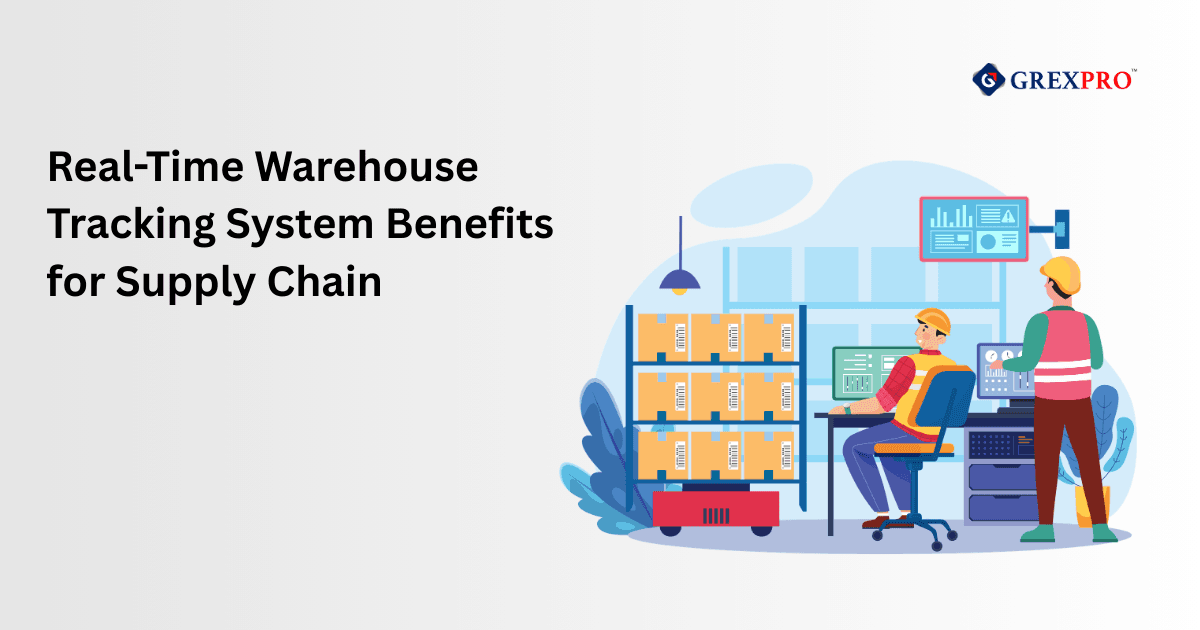
Real-Time Warehouse Tracking System Benefits for Supply Chain
Summary:
Limited inventory visibility, stock discrepancies, and delayed reporting create costly inefficiencies across supply chains. A real-time warehouse tracking system solves this by delivering instant inventory insights, improving accuracy, and enabling faster, data-driven decisions. By integrating structured tracking technology, businesses can reduce operational risks and build a more resilient, efficient supply chain.
The Growing Need for Real-Time Warehouse Visibility
Supply chains are becoming faster, more digital, and more customers driven. Delays, stock mismatches, and inaccurate reporting can directly affect revenue and brand trust. A modern warehouse tracking system enables businesses to monitor inventory movement in real time, reduce manual errors, and maintain operational control. As global supply chains expand, companies require structured data visibility across distribution centres.
Research shows that organizations implementing advanced digital supply chain solutions can improve operational efficiency by up to 30%. Real-time tracking bridges the gap between warehouse operations and strategic planning. It ensures that decision-makers are not reacting to outdated information but working with live data insights.
What Is a Real-Time Warehouse Tracking System?
Warehouse tracking system is an online product that tracks inventory, assets and order flow in the warehouse operations. One of the technologies it employs is the instant updates, which are offered using barcodes, RFID, IoT sensors, and cloud platforms. This system is mostly combined to warehouse tracking software to simplify the allocation of inventory and minimize human intervention.
In contrast with the conventional record keeping systems, the real time tracking keeps the physical stock and the digital records in constant synchronization. This enhances responsibility and minimizes inventory variances. With the support of the ERP and logistics platforms, the overall supply chain coordination and transparency become strong.
Streamline Operations & Drive Smarter Growth
Looking to optimize workflows, reduce inefficiencies, and scale faster? Discover how GrexPro’s intelligent solutions can transform the way your business works.
How to Implement a Warehouse Tracking System (Step-by-Step)
A structured rollout ensures your warehouse tracking system delivers measurable efficiency and visibility improvements. Follow these five essential steps.
Step 1: Audit Current Warehouse Gaps
Identify stock discrepancies, reporting delays, and manual errors. Assess whether your existing warehouse inventory tracking system provides real-time updates or relies on periodic reconciliation.
Step 2: Define System Requirements
Determine needed features such as barcode scanning, RFID, cloud dashboards, and ERP integration. Your inventory management system for warehouse operations should support multi-location visibility if required.
Step 3: Choose Scalable Warehouse Tracking Software
Select warehouse tracking software that offers automation, analytics, and real-time reporting. Smaller facilities can opt for small warehouse inventory management software that is modular and cost-efficient.
Step 4: Standardize and Digitize Inventory Data
Clean and update SKU data before implementation. Integrate your warehouse inventory management software with scanning tools to ensure accurate stock synchronization.
Step 5: Train Teams and Track KPIs
Train warehouse staff and monitor metrics like inventory accuracy, fulfillment time, and stock turnover to measure system performance.
Key Operational Benefits Across the Supply Chain
Live tracking provides quantifiable procurement, storage and distribution performance enhancements. A high-end warehouse inventory monitoring system will make it possible to account for the exact number of stocks, accelerate the speed of the picking cycle, and automatically receive replenishment notifications. Such capabilities minimize the manual control, as well as the operational bottlenecks.
Research has shown that digital inventory systems could help in saving warehouse operation expenses by almost a quarter. Better monitoring reduces shortage and loss of products. It also helps to forecast the demand accurately as it matches the actual level of stock with the sales information in real-time. This correspondence improves the speed of fulfillment and customer satisfaction.
Improved Inventory Accuracy and Reduced Stockouts
Inaccurate inventory may affect the production schedules and slow down deliveries. An efficient system of inventory management in the warehouse setting will see that all products are scanned, followed, and updated on time. This reduces chances of stocking and sudden stockouts.
Proper data also improves planning in procurement. Leveraged together with planned warehouse inventory software, enterprises will be able to predict demand cycles. Real time dashboards are very informative on metrics of stock aging, turnover rates, and replenishment guns. This analytical model minimizes wastage and facilitates the lean inventory solutions.
Enabling Data-Driven Decision Making
The current supply chains rely on analytics. An effective warehouse tracking software platform will create actionable insights on autogenerated reports and real-time dashboards. Managers can monitor the order processing time, space used and productivity of the workforce without manual audits.
The organizations which have adapted analytics-based operations have indicated huge results in improvement of accuracy in fulfillment and cycle time. The use of data visualization tools enables the leadership team to find out the inefficiencies within a short time. This helps in proactive corrections and not reactions. The outcome is the enhancement of agility throughout the supply chain network.
Supporting Small and Mid-Sized Warehouses
The digital transformation has ceased to be the preserve of big businesses. A lot of small businesses and companies expanding are turning to the use of small warehouse inventory management software to simplify operations without the need to have fancy infrastructure. These are cloud based and scalable systems that are affordable and reachable.
Even a small warehouse will have a structured warehouse tracking system that can keep their inventory on professional standards. Automated tracking minimizes the use of spreadsheet and manual reconciliation. This enhances compliance, traceability and transparency of operations. Small warehouses have the advantage of faster order fulfillment as well as customer retention.
Integration with Broader Warehouse Ecosystems
A modern warehouse inventory management software solution works best when integrated with transportation management and procurement systems. This creates a connected ecosystem were data flows seamlessly across departments.
Below is a simplified comparison of traditional versus real-time tracking environments:
| Capability | Traditional System | Real-Time Tracking System |
| Inventory Updates | Manual & periodic | Instant & automated |
| Data Accuracy | Moderate | High precision |
| Stock Visibility | Limited | End-to-end visibility |
| Reporting | Delayed | Live dashboards |
| Decision Support | Reactive | Predictive & proactive |
Such integration enhances visibility beyond warehouse walls. It strengthens coordination between suppliers, distribution partners, and retailers.
Ready to transform your business operations?
Discover how our comprehensive solutions can streamline your workflows, boost productivity, and drive sustainable growth.
Risk Mitigation and Compliance Advantages
The disruption of supply chains is usually attributed to the lack of supply chain visibility and human errors. Fully automated warehouse inventory management system reduces the risks of compliance through keeping precise digital data. It facilitates audit preparedness and regulatory records.
Real-time log increase traceability on recall or shipment issues. This minimizes the cost of financial exposure and downtime. Companies that use developed tracking systems are reported to be more resilient to demand changes and logistics failures. Risk management becomes procedural as opposed to tactical.
Technology Trends Shaping Warehouse Tracking
The new technologies are transforming the management of the warehouse. A warehouse tracking software ecosystem is supported by IoT-enabling devices, AI-based forecasting, and automation tools, which make it more effective. These technologies assist in predictive maintenance and efficient storage assignment.
The statistics in the industry suggest that organizations investing in digital supply chain solutions can grow revenues by double-digit proportions. Smart systems eliminate reliance on human supervision. This guarantees optimization of the process and the scaling. The future of the supply chain performance is founded on the real-time intelligence.
Quantifiable Supply Chain Impact
Real-time warehouse tracking creates measurable value. Below is common performance gains observed across digitally enabled supply chains:
- Up to 30% improvement in inventory accuracy
- 20–25% reduction in warehousing costs
- Faster order processing by 15–20%
- Improved on-time delivery rates
These outcomes demonstrate that a structured inventory management system for warehouse operations directly influences overall supply chain performance. Accurate inventory data strengthens financial forecasting and operational planning.
Why GrexPro Understands Warehouse Intelligence
At GrexPro, the focus is on delivering technology solutions that align operational efficiency with strategic growth. The platform emphasizes structured automation, real-time insights, and scalable design. Businesses seeking operational clarity benefit from a solution architecture that prioritizes integration, visibility, and compliance.
By aligning technology with supply chain strategy, GrexPro supports organizations in transforming traditional warehouse environments into intelligent ecosystems. The approach is not limited to digitization but extends to long-term operational resilience. This positions GrexPro as a trusted technology partner in modern supply chain innovation.
Building a Future-Ready Supply Chain
A modern warehouse tracking system is essential for demand-driven supply chains. Real-time visibility improves inventory accuracy, lowers operational costs, and strengthens decision-making. Intelligent solutions like GrexPro help organizations shift from reactive operations to proactive control with structured, real-time insights.
By adopting scalable platforms such as GrexPro, businesses gain better forecasting, reduced risk, improved transparency, and stronger supply chain resilience without adding operational complexity.
FAQs:
Q: What is a warehouse tracking system?
A: A warehouse tracking system is a digital solution that monitors inventory movement, stock levels, and order flow in real time to improve operational visibility and accuracy.
Q: How does a warehouse inventory tracking system reduce stock discrepancies?
A: It uses real-time data capture through barcodes, RFID, or automation tools to ensure physical stock matches digital records, minimizing manual errors.
Q: Is warehouse inventory management software suitable for small warehouses?
A: Yes, small warehouse inventory management software is scalable and cost-effective, helping smaller facilities automate tracking and improve fulfillment efficiency.
Q: What is the difference between warehouse tracking software and an inventory management system for warehouse operations?
A: Warehouse tracking software focuses on real-time stock visibility, while an inventory management system for warehouse operations includes broader planning, reporting, and optimization features.
Q: How does GrexPro support warehouse tracking and supply chain efficiency?
A: GrexPro provides structured, real-time tracking solutions that improve inventory accuracy, enhance visibility, and support scalable supply chain operations.


 Surendra Yarrum