 3rd September 2025
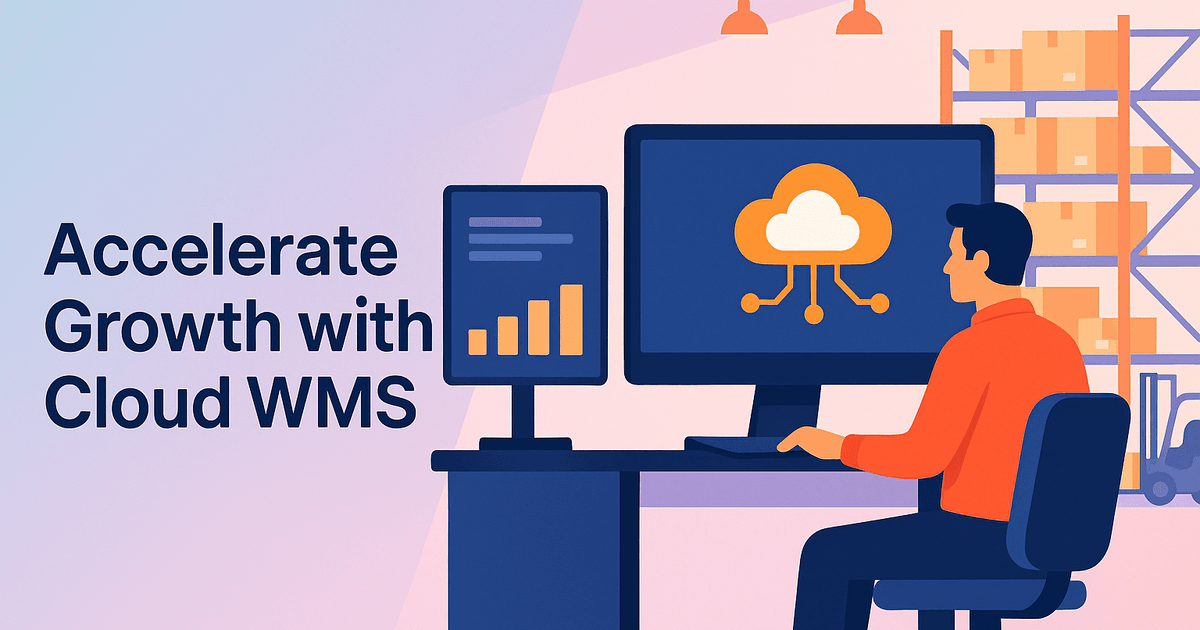
Cloud WMS vs On-Premises WMS: Which Is Best for Growing Businesses?
We understand your hesitations. You’ve faced implementation nightmares, feared vendor lock-in, and watched customization costs spiraling out of control. For you, these aren’t marketing buzzwords; they’re scars on the balance sheet. So when someone suggest, “Just move your warehouse management system to the cloud,” you can almost feel the go-live anxiety rising again.
This article provides a straightforward comparison of cloud WMS vs. on-premise for growing firms. We’ll present the facts without hidden agendas or surprise charges, focusing on what truly matters long after the last consultant has gone home.
Why This Decision Feels Riskier Than It Should
Switching core software once felt like ripping out the warehouse floor while forklifts were still driving over it. Legacy system headaches, integration nightmares, and change-management challenges all pile onto one basic fear: “What if we pick wrong again?”
We get it. At GrexPro, we’ve rescued companies mid-implementation more times than we care to count. The lessons learned there shape the advice you’re reading now.
Cloud WMS vs On-Premise: Side-by-Side Snapshot
The table below cuts through the typical vendor presentation and shows how each option plays out in the real world.
| Factor | Cloud WMS | On-Premise WMS |
| Up-Front Cost | Low capex; subscription model | High capex; licenses, servers, setup |
| Typical Go-Live | Days to weeks; proven templates | Months, heavy customization, and hardware installs |
| Ongoing Maintenance | Vendor handles upgrades and patches | Your IT team or consultants manage updates |
| Scalability | Add users/sites in clicks; no module bloat | New servers & licenses; risk of module bloat |
| Customization | Configurable; code-level changes limited | Unlimited code tweaks—plus unlimited invoices |
| Integration | Modern APIs, pre-built connectors | Custom middleware; higher integration headaches |
| Data Access | Anywhere, any device | Local network or VPN |
| Security & Compliance | Shared responsibility; vendor must meet SOC2/GDPR | You buy, patch, and audit your own servers |
| Exit Strategy | Data export + 30-60-day notice | Sell hardware; migrate databases yourself |
The short version: A cloud solution reduces day-one pain and ongoing upkeep, while an on-premise system offers full control—at a cost most growing firms underestimate.
Streamline Operations & Drive Smarter Growth
Looking to optimize workflows, reduce inefficiencies, and scale faster? Discover how GrexPro’s intelligent solutions can transform the way your business works.
The Real-World Implications for Growing Firms
Implementation Speed & Go-Live Anxiety
Cloud deployments eliminate the hardware ordering, rack-and-stack, and endless “test-patch-rollback” cycles. Our average GrexPro cloud WMS site goes live in under 30 days, which is often faster than it took to schedule the first discovery call during your last on-premise project.
Total Cost Over Time (Not Just Month One)
Yes, subscriptions add up, but they rarely outpace five-year totals for hardware, database licenses, annual maintenance fees, and emergency consultant visits. In our audited projects, on-premise WMS averaged 37% more spend over five years—and that’s not even before counting opportunity costs from downtime.
Scalability Without Module Bloat
Cloud allows you to pilot a solution in one facility and clone the settings to a second in hours. On-premise means re-engineering capacity planning, ordering new servers, negotiating fresh licenses, and praying the add-on module you need doesn’t require yet another integration.
Security & Compliance: Who Carries the Burden?
Top-tier cloud vendors certify against SOC2, ISO 27001, GDPR, CCPA—the works. They pass audits annually because their business depends on it. Keeping up with those in-house demands requires full-time security staff or costly auditors , which is rarely feasible for a small or medium-sized business.
Customization vs. Spiraling Costs
On-premise systems offer infinite code freedom, which often comes with infinite invoices. Cloud systems rely on configuration, extensions, and API hooks. 90% of the workflows we see fit inside those borders without custom code, which prevents scope creep from torching your budget.
Integration Headaches: Old Tech Meets New Tech
Modern cloud WMS platforms ship with open REST APIs and pre-built connectors to Shopify, QuickBooks, and even that decade-old legacy ERP you can’t quite dump yet. On-premises solution often require middleware plus custom scripting. In other words, this leads to more change-management challenges and bigger consulting bills.
How GrexPro Keeps You Out of the ERP
Here is the fixed-scope, no-surprises methodology we use with every growing firm:
- Discovery Without The Meter Running:
We map your current workflows, integrations, and data quality free of charge. This way, you know exactly what you’re signing up for. - Fit-Gap & Cost Lock:
You receive a line-item proposal that covers configuration, data migration, and training. If it’s not in the scope, you don’t pay for it. Period. - Rapid Cloud Deployment:
Our templated setup has guardrails that block over-engineering. Most clients see a working sandbox in week one. - Change-Management Coaching:
Your warehouse floor teams get hands-on, role-based training in plain language, not consultant-speak. This increases adoption rates and reduces support tickets. - Seamless Integration:
Pre-built connectors or standardized API calls plug into your existing ERP, shipping systems, and BI tools without the frustration of module bloat. - Post-Go-Live Partnership:
We stick around. Dedicated advisors track KPIs for 90 days after go-live, adjust workflows, and share quarterly optimization reports. Vendor abandonment? Not on our watch.
Still Worried About Vendor Lock-In?
That’s a concern we hear often. Here’s what makes GrexPro different:
- Data Portability Clauses: Your data remains your property. You can export it in open formats at any time.
- 60-Day Exit Window: If you decide to leave, we provide transition support, not silence.
- Transparent Roadmap: Quarterly product roadmap calls mean no surprise sunsets that force an upgrade.
Pro Tip: Always ask any software provider for a written exit plan before you sign. If they dodge, run.
Ready to transform your business operations?
Discover how our comprehensive solutions can streamline your workflows, boost productivity, and drive sustainable growth.
Quick Self-Check: Are You Cloud-Ready?
- Internet Reliability: If your warehouse loses connectivity more than twice a month, you should first budget for a redundant line.
- IT Bandwidth: Don’t have an in-house Database Administrator (DBA)? Cloud offloads the burden.
- Growth Plans: Are you planning to open new locations or add e-commerce? Cloud scales painlessly.
- Compliance Pressures: Are industry audits keeping you up at night? Cloud shares the load.
- Cash-Flow Flexibility: Do you prefer operating expenses (opex) over capital expenses (capex)? A subscription model fits perfectly.
If you answered “yes” to three or more of these questions, a cloud WMS is likely your lower-risk path.
Low-Pressure Next Step
If you’re ready to banish legacy system headaches and experience the freedom of a transparent, fixed-scope implementation, let’s talk. No pressure, just straight answers. Schedule a 20-minute call with a GrexPro advisor and see whether our approach fits your reality.
FAQ
Q: Will cloud WMS still work if my internet goes down?
A: Modern platforms cache critical tasks locally and resume sync once the connection returns. We also recommend a low-cost backup line for high-volume sites.
Q: Can I customize cloud WMS to match my unique workflows?
A: Yes—through configurable rules, user-defined fields, and API extensions. 9 out of 10 clients achieve full process coverage without custom code.
Q: How does GrexPro price implementations?
A: Fixed-scope, fixed-price. You’ll see every cost line before we start—no hidden fees later.
Q: What about data security in the cloud?
A: Our hosting partners meet SOC2 Type II, ISO 27001, and GDPR standards. Multi-factor authentication and end-to-end encryption are baked in.
Q: I’m stuck on an old on-premise ERP. Can we integrate instead of replace?
A: Absolutely. We have pre-built connectors for most SMB ERPs and open APIs for the rest. Integration doesn’t have to be a nightmare.
A Better Story Awaits
You’ve lived the bad stories. Now, let’s write a better one together—without the cost overruns, without the go-live anxiety, and without the scars. Experience the freedom of a warehouse management system that simply works.


 Surendra Yarrum