 3rd February 2026
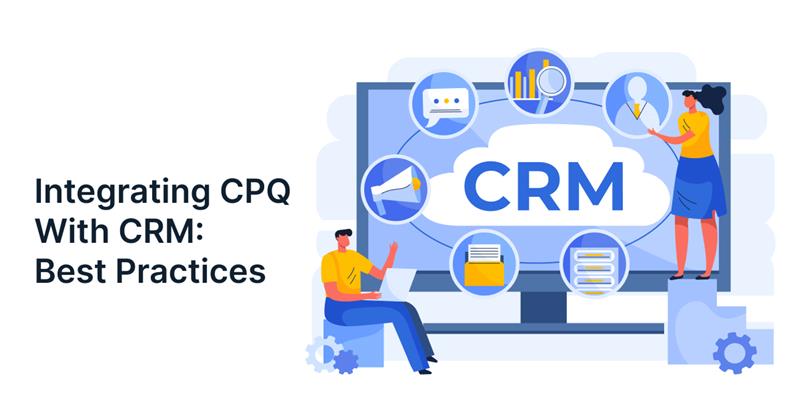
Integrating CPQ With CRM: Best Practices
Introduction: Integrating CPQ With CRM
Reportedly B2B organizations that incorporate sales technologies have deal cycles up to 28% faster and less price errors. However, this does not mean that most of the enterprises do not keep quoting and customer data in different systems. The sales departments alternate between platforms, approvals become sluggish and inconsistent pricing kills trust. The inefficiencies increase with the complexity of the deals.
This is where the need to integrate with cpq crm is strategic and not technical upgrade. The performances of the revenue operations are characterized by delays and inaccuracies as well as lack of visibility when CPQ and CRM systems function in isolation. Organizations realize quantifiable CRM CPQ integration advantages that include quicker quoting, enhanced forecasting, and establish better governance by incorporating them into one workflow. The blog discusses best practices, actual business impact and how the modern CPQ solutions assist scaled sales operations.
Understanding CPQ CRM Integration Beyond Basic Connectivity
There are numerous organizations that believe that the process of integrating the cq crm only requires the data to be synchronized between the platforms. As a matter of fact, successful integration aligns customer records, product configurations, pricing logic, and approvals into a single system. CRM possesses the relationships and opportunities, whereas CPQ implements the rules to guarantee that all quotes are correct, valid, and profitable.
Under the right implementation of the cpq integration, it is the sales representatives who create the quotes based on the opportunities in the CRM that are based on real-time pricing and configuration rules. According to Salesforce, the rework and manual correction is minimized by almost a quarter in integrated sales teams. This fit is particularly critical in businesses that sell tailored merchandise, package enterprise, or multi-geographical deals. Errors grow with increase in transactions unless it is well integrated and hence it is not easy to scale.
Streamline Operations & Drive Smarter Growth
Looking to optimize workflows, reduce inefficiencies, and scale faster? Discover how GrexPro’s intelligent solutions can transform the way your business works.
Key Operational Challenges Solved by CPQ CRM Integration
Disconnected sales systems create friction that directly impacts revenue. Manual quoting, outdated pricing, and approval bottlenecks reduce sales velocity and introduce risk. Modern CPQ solutions integrated with CRM eliminate these issues by standardizing processes across teams.
Common problems addressed include:
- Inconsistent pricing caused by manual discounts and outdated catalogues
- Slow quote approvals due to email-based workflows
- Poor forecasting accuracy from disconnected opportunity data
Research shows that companies with integrated revenue systems improve forecast accuracy by up to 30%. These CRM CPQ integration benefits allow leadership to make data-backed decisions while ensuring sales teams move faster without compromising margins.
Best Practices for Implementing CPQ CRM Integration Successfully
Effective cpq crm integration is not just about linking two systems but having proper data architecture, workflow and user experience planning to guarantee adoption and long-term value. Most integrations do not fail because of technology, but rather because they repeat inefficient manual operations rather than making them efficient. Coupling CPQ and CRM with the existing quoting, approval, and tracking systems may make the problem more complex.
Organizations need to establish strict governance and adhere to well-developed cpq integration models to realize actual outcomes. According to Forrester, companies who have expressed very specific strategies in integration are implemented faster and incur less support costs after deployment.
Key best practices that enable sustainable integration include:
- Clear ownership of product and pricing data
Assigning responsibility for maintaining product catalogues and pricing rules prevents conflicts, outdated quotes, and margin leakage across sales teams.
- Standardized CRM data structures before integration
Cleaning and normalizing CRM fields ensures CPQ functions accurately and reduces errors during quote generation.
- Rule-based approval automation
Automating approvals based on discount levels or deal size removes delays while maintaining pricing control and compliance.
- Phased rollout aligned with sales workflows
Gradual implementation minimizes disruption, allows early feedback, and improves adoption across distributed teams.
When executed correctly, cpq crm integration simplifies sales workflows, reduces friction for sales teams, and creates a scalable foundation for future growth rather than adding another layer of operational complexity.
Common CPQ CRM Integration Pitfalls and How to Avoid Them
Despite its advantages, cpq crm integration can fail if foundational issues are overlooked. Many implementations struggle not because of technology, but due to poor preparation and adoption challenges. Systems may be technically connected yet remain operationally disconnected, reducing expected business value.
To avoid common pitfalls, organizations should focus on the following areas:
- Poor data hygiene
Inconsistent or incomplete CRM data can break CPQ rules, leading to inaccurate quotes and frustrated sales teams.
- Over-customization
Excessive configuration slows quote generation, complicates upgrades, and reduces system flexibility.
- Insufficient training
Without proper onboarding, sales reps often bypass the CPQ system, reverting to spreadsheets and manual processes.
- Ignoring real sales workflows
Modern CPQ solutions work best when aligned with actual sales behavior rather than idealized processes.
- Lack of continuous governance
Integration requires ongoing monitoring and optimization to ensure long-term value and scalability.
By addressing these areas, organizations can ensure that cpq crm integration delivers faster adoption, higher quote accuracy, and sustained operational efficiency.
Ready to transform your business operations?
Discover how our comprehensive solutions can streamline your workflows, boost productivity, and drive sustainable growth.
Grexpro’s Perspective on CPQ CRM Integration Excellence
Grexpro takes a long-term operation maturity of revenue operations, as opposed to short-term automation, in its approach to the integration of cpq crm. Their systems of integration focus on clean data architecture, scalable processes and quantifiable business results.
By integrating CRM opportunity management with mature CPQ products, Grexpro assists organizations to gain sustainable CRM CPQ integration merits including decreased sales cycles, and enhanced pricing control. This mindset of integration first makes sure that the systems are developed as the business grows as opposed to turning to bottlenecks.
Build Connected and Intelligent CPQ CRM Integration
Successful cpq integration will turn sales into a responsive process, which becomes a predictable source of revenue. When CRM and CPQ function as a single system, organizations will achieve speed, accuracy and visibility without adding additional overhead to their operations.
To companies considering how to modernize quoting and customer management, investigation of CPQ CRM integration strategies based on best-practices, such as those suggested by Grexpro can enable future-proofed sales processes, and provide scalable, error-free revenue processes.
FAQs
Q: What is CPQ CRM integration and why does it matter?
A: CPQ CRM integration connects quoting logic with customer data to improve speed, accuracy, and scalability in B2B sales.
Q: What are the most important CRM CPQ integration benefits?
A: Key CRM CPQ integration benefits include faster deal cycles, reduced pricing errors, and improved revenue forecasting.
Q: How does CPQ integration improve sales accuracy?
A: CPQ integration enforces configuration and pricing rules automatically, reducing manual errors and rework.
Q: Are CPQ solutions suitable for growing enterprises?
A: Yes, modern CPQ solutions are scalable and support complex pricing models across regions and products.
Q: What challenges arise during CPQ CRM integration?
A: Data quality, workflow alignment, and user adoption are common challenges in cpq crm integration projects.
Q: How does Grexpro support CPQ CRM integration initiatives?
A: Grexpro delivers integration frameworks that align CRM workflows with scalable CPQ solutions for long-term growth.

 Surendra Yarrum