 2nd June 2026
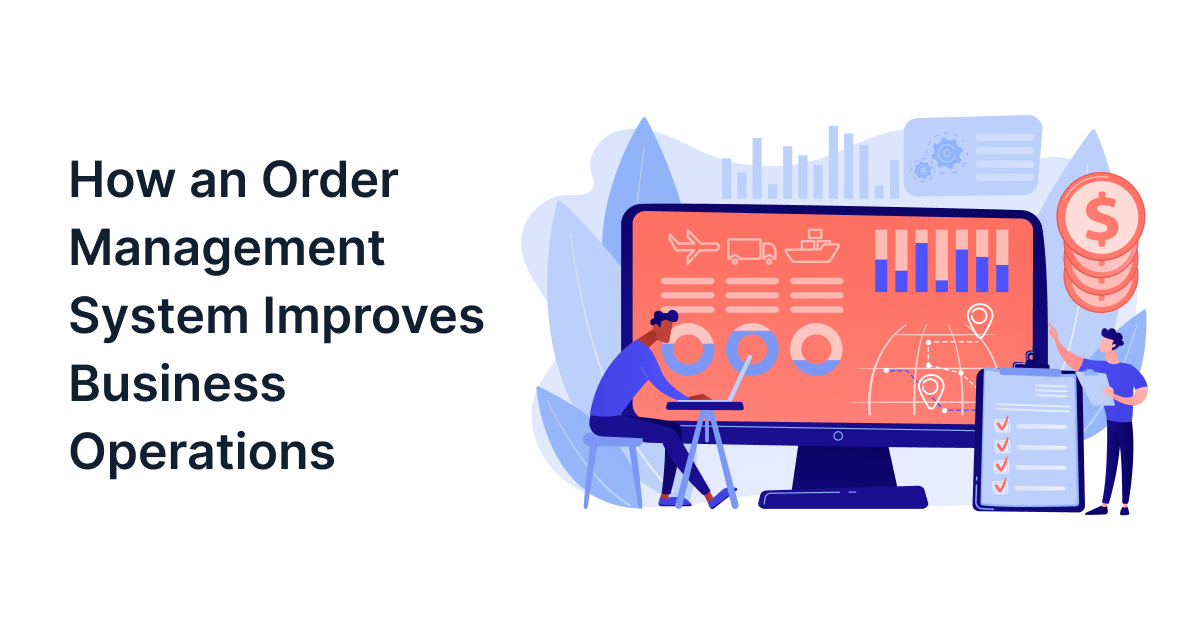
How an Order Management System Improves Business Operations
Introduction
An order management system improves business operations by centralising order processing, automating fulfilment workflows & delivering real‑time business analytics. Businesses using modern OMS platforms can reduce fulfilment delays, improve inventory accuracy, and gain real-time operational visibility across sales channels.
It helps businesses reduce manual errors, speed up deliveries, improve customer satisfaction & gain better visibility across inventory, sales & performance data.
As businesses scale, handling orders through spreadsheets or disconnected tools becomes inefficient. Organisations today need reliable business management software that connects order processing with inventory, finance & logistics. This is where a modern order management system (OMS) plays a critical role in maintaining operational control.
When implemented as part of a broader ERP setup, an OMS system becomes even more powerful. Solutions like GrexPro ERP features integrate order workflows with finance, CRM & business analytics software, enabling end‑to‑end operational efficiency.
Key Summary
- An order management system centralises and automates order workflows
- OMS platforms improve fulfilment speed and accuracy
- Real‑time data supports better business analytics
- OMS solutions scale easily for small and mid‑sized businesses
What Is an Order Management System?
An order management system is software that manages and tracks customer orders from placement to delivery in a single, centralised system. It connects order data with inventory, fulfilment & financial processes to ensure accurate processing, faster deliveries & better operational control.
A typical OMS platform includes –
- Order capture across multiple sales channels
- Inventory visibility across locations
- Automated fulfilment and shipping workflows
- Reporting through business analytics software
For companies using modern business management software, an OMS system ensures that order‑related operations remain accurate, fast & scalable.
Streamline Operations & Drive Smarter Growth
Looking to optimize workflows, reduce inefficiencies, and scale faster? Discover how GrexPro’s intelligent solutions can transform the way your business works.
How Does an Order Management System Improve Business Operations?
To improve business operations, you need streamlined workflows and real‑time visibility, which an order management system provides. It removes operational silos and reduces dependency on manual processes.
Order management systems improve business operations in the following ways –
- Centralised order processing –
Orders from online, offline & B2B channels are managed in one system, reducing duplication and ensuring consistent data across teams.
- Faster order fulfilment –
Integrated order fulfilment software automates order routing, helping businesses dispatch orders more quickly and accurately.
- Real‑time inventory visibility –
An OMS system synchronises inventory levels across warehouses, preventing overselling and unexpected stockouts.
- Operational insights –
Built‑in business analytics software helps track order cycles, fulfilment performance & sales trends.
Why Is Order Fulfilment Software Important for Business Growth?
To meet customer expectations, you need order fulfilment software that ensures speed and accuracy. Manual fulfilment processes often struggle as order volumes increase.
Order fulfilment software within an OMS system helps businesses by –
- Automating picking, packing & shipping tasks
- Reducing fulfilment errors and delivery delays
- Providing order tracking visibility to customers
Did You Know?
“IBM explains that modern order management systems help businesses orchestrate inventory and fulfilment across channels in real time, improving delivery speed and customer satisfaction.”- IBM Order Management Report
How Does an OMS Platform Support Business Analytics?
To make data‑driven decisions, you need an OMS platform that feeds accurate data into business analytics software. Order data is one of the most valuable operational data sources.
An OMS system enables –
Sales performance analysis across channels
It consolidates order data from online, offline & B2B channels, allowing businesses to compare sales trends, identify top‑performing channels & optimise revenue strategies.
Monitoring order fulfilment cycle times
Businesses can track how long each order takes from placement to delivery, helping identify bottlenecks and improve fulfilment speed and efficiency.
Identifying customer buying patterns
An OMS platform highlights repeat purchases, order frequency & product preferences, enabling more targeted marketing and personalised customer experiences.
Supporting demand forecasting initiatives
Historical order data from the OMS system feeds into forecasting models, helping businesses plan inventory levels more accurately and reduce stock‑related risks.
This data becomes even more impactful when combined with AI‑driven insights, as explained in AI inventory management and demand prediction.
Is Order Management Software Suitable for Small Businesses?
To scale efficiently, small businesses need order management software that replaces manual tracking. Today’s cloud‑based OMS platforms are accessible and cost‑effective.
Benefits of order management software for small business include –
- Simplified order tracking without spreadsheets
- Better cash‑flow and order visibility
- Reduced operational workload for small teams
When paired with flexible business management software, an OMS system allows small businesses to grow without adding unnecessary complexity.
How Do Order Management Systems Improve Fulfilment Accuracy?
To reduce fulfilment errors, you need order management systems that automate validation and routing. Manual processes are a major cause of delivery issues and returns.
Order management systems improve fulfilment by –
- Validating stock availability before order confirmation
- Automatically assigning orders to the right fulfilment centre
- Reducing human errors during order processing
This is why order management systems improve fulfilment reliability and customer trust.
OMS Platform vs Manual Order Processing
| Feature | OMS Platform | Manual Processing |
| Order Accuracy | High | Error‑prone |
| Fulfilment Speed | Automated | Slow |
| Inventory Visibility | Real‑time | Delayed |
| Analytics | Built‑in business analytics software | Limited |
| Scalability | High | Low |
How Secure Are Modern OMS Systems?
To protect sensitive order data, you need an OMS system built on secure cloud infrastructure. Most modern OMS platforms follow enterprise‑grade security practices.
Key security benefits include –
- Encrypted transaction data
- Role‑based access control
- Secure cloud hosting environments
GrexPro follows best practices aligned with cloud ERP security standards to ensure data protection and compliance.
| “According to Grand View Research, the global order management software market is expected to grow steadily through 2030, driven by omnichannel retail and digital transformation initiatives.” — Source: https://www.grandviewresearch.com/industry-analysis/order-management-software-market |
How OMS Fits into Business Management Software Ecosystems
To unify operations, you need an OMS system integrated with broader business management software. Standalone tools often limit visibility and scalability.
An integrated OMS system enables –
- Seamless coordination between sales, inventory & finance
- Unified reporting through business analytics software
- End‑to‑end visibility across order lifecycles
GrexPro’s OMS capabilities are designed to work as part of a connected ERP ecosystem rather than an isolated tool.
Ready to transform your business operations?
Discover how our comprehensive solutions can streamline your workflows, boost productivity, and drive sustainable growth.
Operational Risks of Manual Order Processing
Manual order processing exposes businesses to operational risks that directly impact efficiency and customer satisfaction. Common issues include data entry errors, delayed order fulfilment, poor inventory visibility & miscommunication between teams. Over time, these inefficiencies increase fulfilment costs, lead to incorrect shipments & limit a business’s ability to scale reliably.
Conclusion: Why Your Business Needs an Order Management System
An order management system is essential for businesses looking to improve operational efficiency, fulfilment accuracy & decision‑making. From small businesses to large enterprises, OMS platforms strengthen fulfilment processes and enhance business management software capabilities.
Ready to optimise your order operations? Contact GrexPro today to help your business centralise order workflows, automate fulfilment coordination & improve operational visibility through integrated ERP analytics.
Frequently Asked Questions (FAQs)
Q: What is an order management system?
A: An order management system is software that manages customer orders from placement to delivery. It centralises order data, automates fulfilment workflows & integrates inventory, shipping & analytics.
Q: How do order management systems improve fulfilment?
A: Order management systems improve fulfilment by automating order routing, validating inventory availability & reducing manual errors that often cause delays or incorrect shipments.
Q: Is order management software good for small businesses?
A: Yes. Order management software for small business helps growing teams manage increasing order volumes efficiently without relying on spreadsheets or manual tracking.
Q: What is an OMS platform?
A: An OMS platform is a centralised system that handles order processing, fulfilment, inventory visibility & reporting across multiple sales channels.
Q: Does OMS system support business analytics?
A: Yes. OMS systems generate operational data that feeds into business analytics software, helping businesses analyse performance and optimise processes.
Q: How secure are cloud‑based OMS systems?
A: Most modern OMS systems follow strict security standards, including encrypted data, role‑based access & secure cloud infrastructure.

 Surendra Yarrum